
Get WazirX News First
Crypto investing has matured; the conversations are no longer just about price targets and token launches. They are about custody, compliance, and risk management. And yet, most losses in this space still happen for one simple reason: preventable security mistakes.
Understanding how to keep crypto safe is not about technical mastery. It is about discipline. The kind that feels small in the moment but proves invaluable over time.
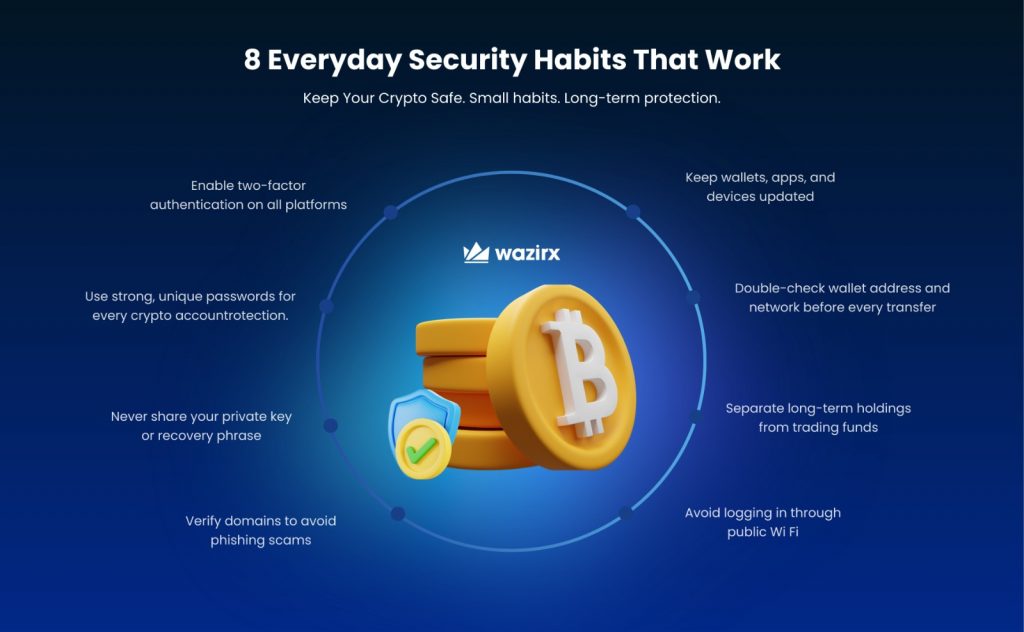
Below are eight habits that experienced investors treat as non-negotiable.
1. Build a Strong Password Foundation
Security always begins with access control. Weak or reused passwords remain one of the most common vulnerabilities across digital platforms.
Every crypto-related account should have a unique and complex password. If you trade through an exchange like WazirX or hold assets in a wallet, those credentials should not exist anywhere else online.
A password manager is not overkill; it is basic operational hygiene.
2. Activate Two-Factor Authentication Everywhere
Two-factor authentication is no longer optional; it is the baseline.
Even if login details are exposed, 2FA prevents unauthorized access without the second verification step. App-based authenticators provide stronger protection than SMS, where possible.
Most reputable platforms, including WazirX, offer layered security settings such as login alerts and withdrawal confirmations. These tools exist for a reason; use them. Enabling them takes minutes and meaningfully improves your ability to protect the crypto account.
3. Treat Urgent Messages With Suspicion
The majority of breaches today are not technical; they are psychological.
Crypto phishing scams rely on urgency and imitation; a fake security alert, a message about unusual activity, or a replica login page that looks convincing at first glance.
The discipline here is simple – Slow down, verify the domain name, bookmark official platforms instead of relying on search results, and remember that no legitimate service will ever request your private keys or recovery phrase.
A cautious mindset is one of the most effective crypto security tips available.
4. Understand What Secures Your Wallet
Securing the crypto wallet starts with knowing what provides access.
If you have a self-custody wallet, the recovery phrase is your only key to the wallet, so be sure to write it down and keep it somewhere safe and offline. Do not take screenshots or store your seed in the cloud, as those options introduce unwarranted risk.
If you hold crypto on an exchange (for example, for liquidity or convenience), ensure you review the security features in your account. Platforms like WazirX, which have structured functionality, provide account tracking and monitoring features that help you achieve better transparency and lower your risk exposure when used correctly.
Securing any system is rarely automatic; it must be configured.
5. Update Your Software Regularly
Old software/applications create openings that hackers will look for.
Wallets, exchanges, browsers, and operating systems push out updates to fix/secure vulnerabilities that attackers exploit. Failing to do so creates a gap in your security regarding these same vulnerabilities.
Making sure that your software/app stays current is one of the easiest but most consistently ignored items on any serious list of crypto safety guides.
6. Be Careful Where You Log In From
Where you log into your accounts matters more than most users think.
Public Wi-Fi networks are convenient, but they are less than ideal when conducting financial business. Logging into your trading account through unsecured connections exposes you to greater risk.
When accessing your investment account while you travel, use either a secure Wi-Fi network or a reputable VPN. Controlling your surroundings is one way of understanding how to best protect the crypto from a “real-life” point of view.
7. Separate Long-Term Storage From Active Trading Funds
Risk management applies to both the custody of assets and the portfolio allocation of assets as well.
One of the things that many professional investors separate is their long-term holdings vs their trading capital. By only holding the necessary liquidity on an exchange and then securing the rest of your long-term holdings in a more secure method, because you will not be using them soon, it reduces your risk exposure.
Using a robust system like WazirX to conduct most of your day-to-day business and then separating your funds according to their functions adds another level of protection as well.
8. Make Sure to Review Every Move You Make
Due to their very nature, crypto transactions are not reversible. Therefore, take the time to double-check the following three items before completing any transfers of funds: your wallet address is correct, the network that you are sending to is correct, and the amount of the transaction is correct.
By taking just a few seconds to double-check the information before completing your transfer, your chances of an error occurring are greatly reduced.
Speed is rarely an ingredient of financial security, while precision is a very important ingredient.
Final Statement
The security of crypto assets does not require you to have dramatic ways of minimising risk. It is simply a matter of having the same level of operational discipline on an ongoing basis.
The individual factors of having strong passwords, two-factor authentication, phishing awareness, limiting access to your wallets and thoughtful separation of your assets all work together to greatly minimise your risk. None of them is the sole factor in ensuring your safety; however, when they are used in combination, they are.
A practical crypto safety guide is not built on fear. It is built on routine. Investors who treat security as part of their investment process, rather than an afterthought, are far more likely to remain in control of their assets.
In digital finance, ownership and responsibility are inseparable. The difference between a setback and stability often comes down to everyday habits.
 Disclaimer: Click Here to read the Disclaimer.