

Glamsterdam is a bundle of Ethereum Improvement Proposals (EIPs) targeting two specific problems: transaction cost and throughput. The name follows Ethereum’s quirky upgrade naming tradition, combining “Glasgow” and “Amsterdam,” the cities where Ethereum developer summits were held during its design phase.
- Glamsterdam is Ethereum’s next major protocol upgrade, targeting a 78% reduction in gas fees.
- It introduces parallel transaction processing, which means faster execution across the network.
- Lower fees directly unlock DeFi, NFT, and RWA activity that was previously too expensive for most users.
- All 10 spot ETH ETFs turned positive simultaneously in April 2026, with institutional interest growing alongside this upgrade cycle.
Ethereum gas fees have been the single biggest complaint about the network since it scaled in 2020. Sending tokens, interacting with a DeFi protocol, or even a simple swap could cost anywhere from a few dollars to, during peak congestion, over $100. That friction is about to change significantly.
The Glamsterdam upgrade is Ethereum’s most consequential execution-layer overhaul in years. It is part of the broader 2026 roadmap and is scheduled for H1 2026. If it ships on time, it will change how Ethereum actually runs transactions, not just how they are priced.
What Glamsterdam Actually Is
At the execution layer, Ethereum has long processed transactions sequentially. One transaction completes, then the next begins. This works but it creates a hard ceiling on how many operations the network can handle per second.
Glamsterdam breaks that ceiling by introducing parallel transaction processing for non-conflicting transactions, meaning transactions that do not touch the same smart contract state can now execute simultaneously.
The Gas Fee Mechanism: Why 78% Is a Credible Number
Main guide: Ethereum Gas Fees Explained
Gas fees on Ethereum are not arbitrary. They reflect computational demand. When many users compete to get their transactions included in the next block, fees spike because miners and validators prioritize higher-paying transactions.
Glamsterdam addresses this from two angles:
- The upgrade raises the gas limit. The Ethereum Foundation has been pushing for a 180 million gas limit (up from the current ~36 million), which directly expands how much computation can fit in a single block. More space per block means less competition, and less competition means lower fees.
- Parallel processing reduces the time validators spend on each block. When transactions that do not conflict with each other can execute simultaneously, validators can process more operations per unit of time without increasing hardware requirements. This efficiency gain translates directly to lower per-transaction costs.
Also read: 4 Ways to Avoid High Ethereum Gas Fees
The 78% figure comes from internal modeling by the Ethereum Foundation, based on simulated block conditions under the new gas limit and parallelization model. Real-world numbers will vary by network demand, but even a 40-50% reduction in average gas would represent a significant shift for everyday users.
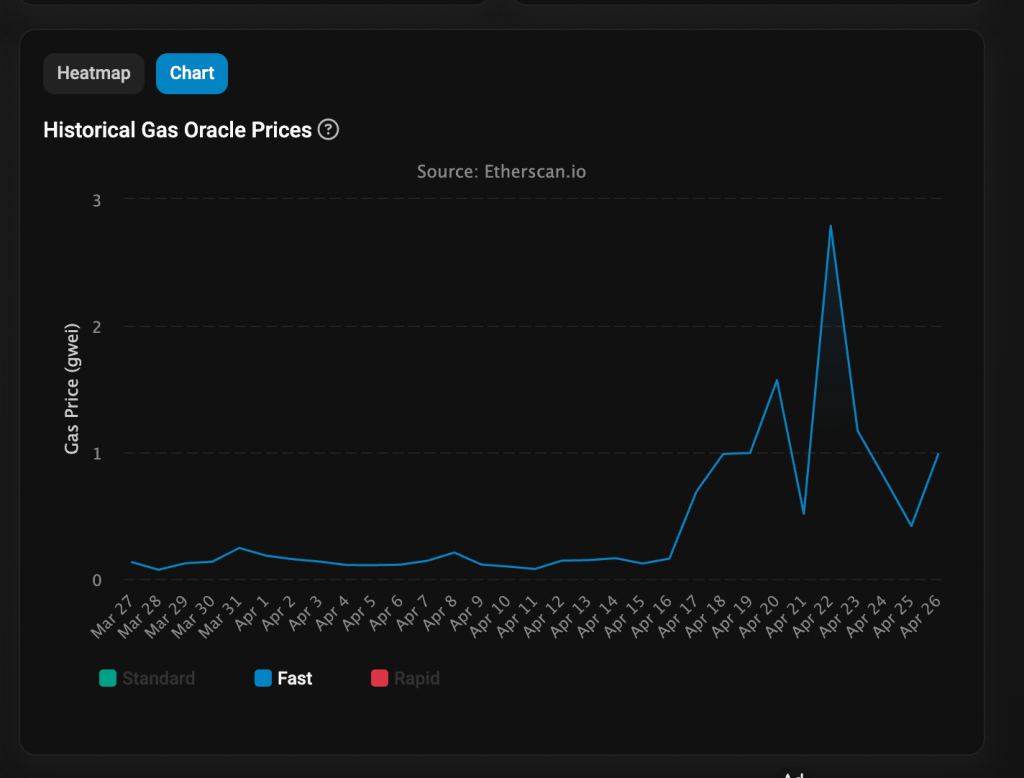
Ethereum average gas price over time
What Parallel Processing Changes at the Protocol Level
The core innovation in Glamsterdam’s parallel execution model is access list pre-declaration. Before a transaction executes, it must declare which contract storage slots it will read or write.
The network then uses these declarations to identify transactions that have no storage overlap and can therefore run at the same time without corrupting state.
This is a meaningful engineering shift. It changes how developers write smart contracts because they now need to explicitly declare access patterns upfront. Contracts that bundle too many reads and writes into a single call will not benefit from parallelization, which creates an incentive for developers to write leaner, more modular code.
For end users, this means faster finality on simple interactions, swaps, transfers, and wallet approvals, because these operations are straightforward to parallelize. Complex DeFi strategies that chain multiple contract calls will still benefit from lower fees but may not see the same speed improvement.
The DeFi and RWA Case: Why This Unlocks Real Capital
The blockchain trilemma has always meant trade-offs: security, decentralization, and scalability cannot all be maximized at once. Ethereum chose security and decentralization. Gas fees were the price of that choice.
That cost has kept two major categories of activity off Ethereum’s mainnet: small-value DeFi interactions and Real World Asset (RWA) tokenization at scale.
- On DeFi: Protocols like Aave and Uniswap see significant drop-off in activity when gas fees rise above $10 because the fee eats into the yield or profit margin of the trade. Lower fees directly expand the addressable pool of users for whom DeFi is economically viable.
- On RWAs: The tokenization of real-world assets like government bonds, invoices, and real estate has grown from $5.6 billion to nearly $19 billion in total on-chain value over the past year, and the bulk of that growth lives on Ethereum.
Settlement of these instruments requires frequent on-chain interactions. High gas fees create friction that institutional tokenization platforms work around through batch processing. If fees drop significantly, real-time settlement becomes viable, which is a structural unlock for this entire sector.
ETH Spot ETFs: Institutional Capital is Already Positioning
Glamsterdam does not exist in isolation. The upgrade is landing during a period of unusual institutional alignment with Ethereum.
All 10 spot ETH ETFs in the U.S. turned net positive simultaneously in early April 2026, a first since their approval. The RWA tokenization market growth is pulling asset managers onto the Ethereum stack. And Glamsterdam gives these institutions a concrete technical catalyst to point to when making the case for ETH exposure.
The upgrade follows a pattern Ethereum traders know well: technical catalysts tend to be priced in slowly, then sharply when delivery becomes imminent. ETH is currently trading around $2,300, well below its cycle highs, which means the Glamsterdam catalyst has not fully landed in price yet.
What This Means for Indian Traders Specifically
Indian traders holding ETH as a spot position on WazirX face a straightforward decision framework. Glamsterdam is a scheduled, consensus-backed upgrade with broad developer support. It is not speculative. The question is whether its effects will be material enough to drive sustained demand for ETH.
The case for yes: lower fees increase network utility, which increases block space demand, which creates fee pressure that benefits validators and by extension, ETH stakers. As more DeFi and RWA activity migrates to mainnet from L2s (which becomes viable when mainnet gas is competitive with L2 costs), ETH burn from EIP-1559 could increase, reducing circulating supply over time.
The case for caution: upgrade timelines in Ethereum’s history have slipped. The Pectra upgrade was delayed multiple times before shipping. Glamsterdam is a more complex change because parallel execution requires changes to how contracts declare access patterns, and that creates surface area for bugs. A delay to H2 2026 is entirely possible.
For traders holding spot ETH, the upgrade provides a medium-term narrative anchor. For active traders, the period leading up to a confirmed ship date is historically when ETH outperforms BTC on a relative basis.
Final Thoughts
Glamsterdam is the upgrade Ethereum’s user base has been waiting for since the network became expensive enough to matter. A 78% gas fee reduction, if it holds in practice, removes the single biggest barrier to mainnet DeFi adoption. Parallel processing is the right architectural move for a network trying to compete with faster L1s without sacrificing decentralization.
 Disclaimer: Click Here to read the Disclaimer.