

Last time, we looked at Huang’s resignation on 12 November and why it mattered for crypto even though Nvidia and Bitcoin have almost nothing in common as businesses.
The stock had already fallen sharply, Bitcoin was under pressure, and the episode showed how tightly the two markets were linked. Eleven days later the board brought him back. Nvidia’s stock rose more than 33% in one session. Bitcoin climbed from the mid-$55,000s back above $64,000. The speed and size of the reversal give a clearer picture of the same risks we flagged last week.
Where The Numbers Stood After Huang’s Resignation
| Asset | Level around resignation (12 Nov) | Lowest point before reinstatement | Change from recent highs |
| Nvidia stock | Closed near $166 on 12 Nov (after touching $149 intraday) | Near $125 on 20 Nov | Roughly 28% lower than 11 Nov close; about $2.7 trillion lost from October peak |
| Bitcoin | Near 71,000–73,000 on 12 Nov | About $55,130 over the weekend of 21–22 Nov | Down from low-to-mid $70,000s earlier in the month |
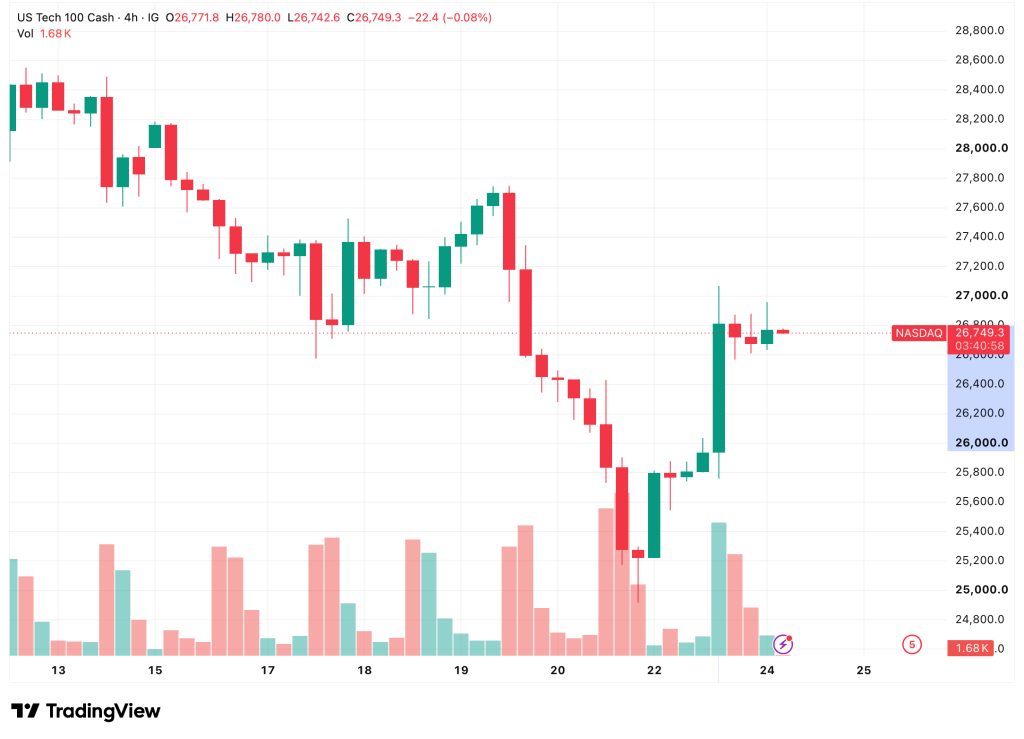
| Nasdaq | Down on the day | About 10% lower over the week | Broad tech selling |
What The Numbers Showed This Week
The market treats Jensen Huang’s presence as a major reason prices rise or fall in Nvidia and the assets that move with it. This is why, on 23 November, Nvidia’s stock jumped more than 33% to near 167–170, its largest one-day gain ever.
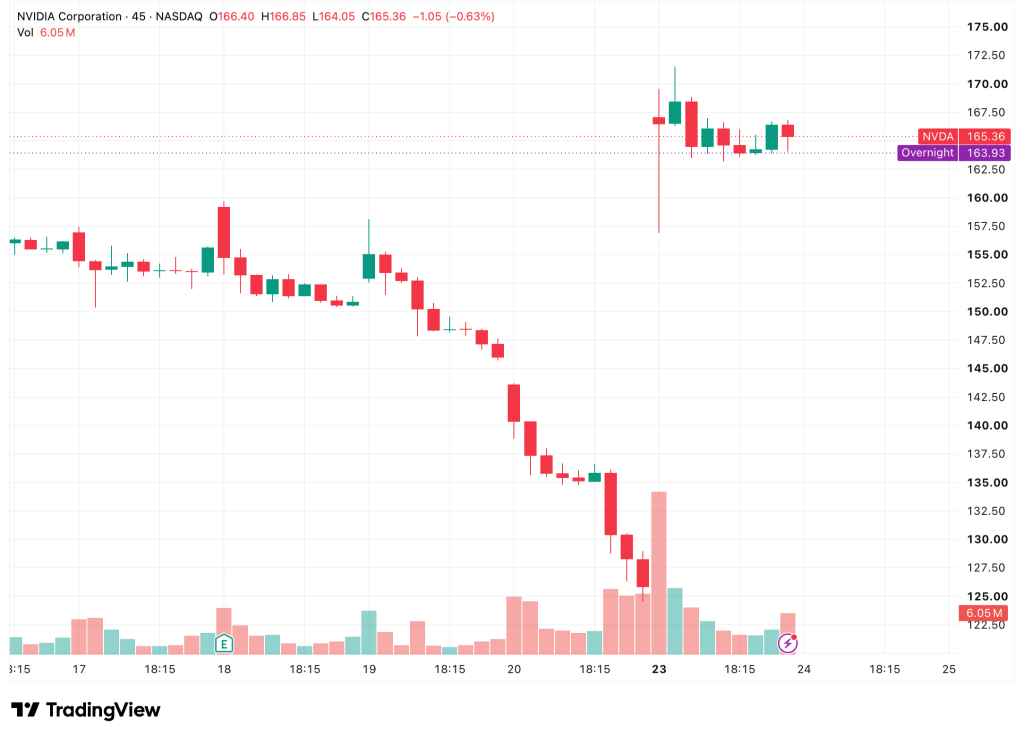
Crypto simply followed Nvidia as the central company in the AI trade, with no deeper view of Huang or the company itself. Bitcoin, which had fallen to about $55,130 over the weekend, rose more than 4% in the first hour and traded above $64,000. Ethereum rose closer to 7%.
Roughly $404 million in crypto positions were closed, including about $372 million in positions that expected prices to fall.
Who Is Jensen Huang and Why He Is in the News
Jensen Huang co-founded Nvidia, the chip making giant in 1993. Nvidia’s Chips are the backbone of AI models from OpenAI, Google, and Anthropic. This in turn made the company and Huang the main players of the current AI boom.
Last week there were reports of extramarital affairs involving Jense Huang, and one of them involved a woman that U.S. officials suspected might have links to Chinese intelligence.
Nvidia’s board soon opened an investigation and on 12 November Huang resigned as CEO, while the CFO stepped in as the interim CEO.
The market reacted with shock and memes. Uncertainty rose because he had led the company for more than 30 years. Nvidia’s stocks also saw a significant drop following this incident.
Why Stocks and Crypto Moved Together
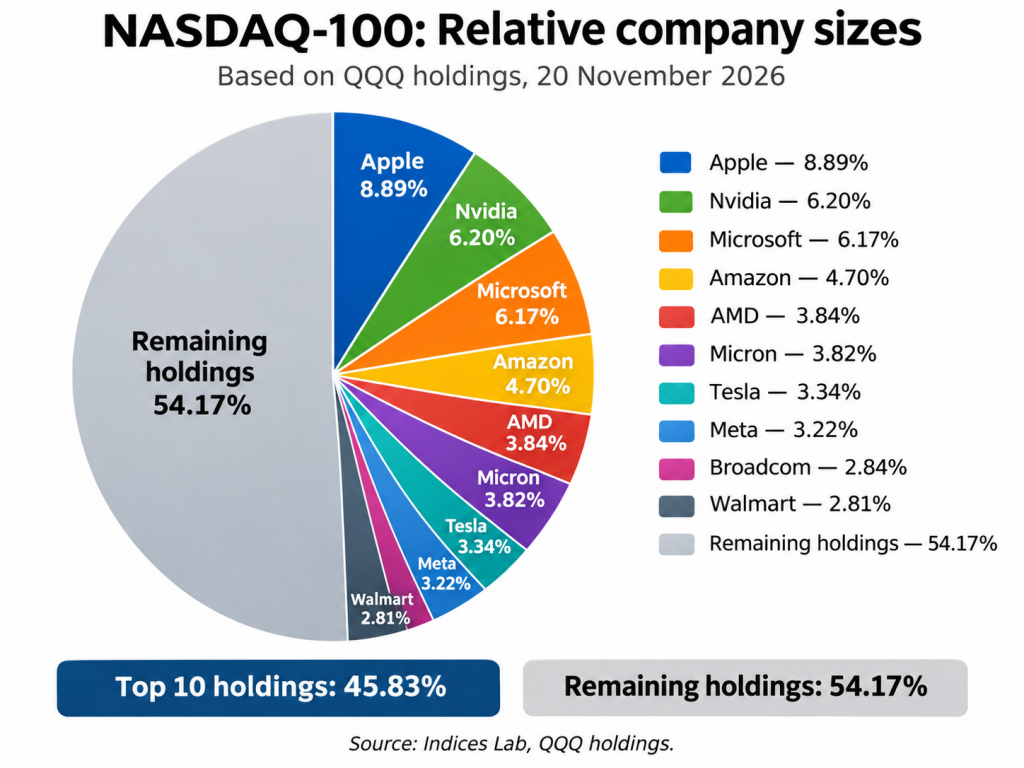
Nvidia ranks third by market cap in NDXT and represents 7% of the Nasdaq-100’s total market value. Meanwhile the crypto market have shown a positive correlation with tech stocks since the March 2020 COVID crash.
These two forces acted together:
- Bitcoin’s positive correlation with tech stocks meant that it moved in the same direction as Nvidia. Traders acting on this correlation amplified the price swings.
- And when Huang returned, 370–440 million in crypto short positions were liquidated, accelerating Bitcoin’s recovery.
Final Thoughts
Bitcoin may be becoming an outlet for financial anxiety when stock markets are closed. This is not new. We saw this during the Japanese carry trade unwind in August 2024 and again during Trump’s tariff announcements in February 2025.
What is new, however, is that the direction of influence may be changing. As more traders use crypto to respond to global financial developments over the weekend, its price movements could increasingly shape expectations for traditional markets ahead of Monday’s opening.
For years, crypto traders have looked to traditional financial markets to make sense of their own. We may be entering a phase where traditional market traders increasingly need to study crypto to make sense of theirs.
 Disclaimer: Click Here to read the Disclaimer.