

There was a period in early 2026 when Bitcoin looked nothing like digital gold. Gold was up more than 16% year-to-date. Bitcoin was down nearly 19% over the same stretch. The staple “digital gold” narrative of crypto ,had gone quiet.
However, since early March 2026, Bitcoin has outperformed gold by 13.2%. The 90-day correlation between the two assets has flipped from negative to positive.
- Bitcoin underperformed gold badly in early 2026 but outperformed by 13.2% since early March, reviving a debate most people had declared over.
- The 90-day BTC-gold correlation shifted from -0.27 to +0.29, the first positive reading in months.
- On-chain data shows whale accumulation during the dip, but the rally itself was largely derivatives-driven, not fresh spot demand.
- Whether the thesis holds depends on sustained ETF inflows, macro stabilisation, and BTC holding above key support levels.
Why BTC vs Gold Is a Hot Debate Again
For most of 2025 and into early 2026, gold had the better story. Central banks were loading up. The Iran war, which began in late February 2026, pushed oil toward $100 per barrel, stoking inflation fears and sending investors toward traditional safe havens. Gold climbed. Bitcoin mostly drifted.
Year-to-date through mid-March 2026, GLD (the gold ETF) had returned roughly 16%, while IBIT (the spot Bitcoin ETF) had lost approximately 19%. That is a 35-percentage-point gap. For anyone who had argued that Bitcoin was “just like gold but better,” the scoreboard was not kind.
Then the dynamic started to reverse. Starting in early March, Bitcoin began catching up. Over a two-week stretch, BTC outperformed gold by 13.2%. Not enough to close the YTD gap, but enough to revive the conversation.
Is this a genuine revival of the digital gold thesis, or is Bitcoin simply catching a bid in a volatile macro environment?
What the “Digital Gold” Thesis Actually Claims
The digital gold thesis argues Bitcoin can act as a store of value due to its fixed supply and decentralisation, but it does not require short-term price correlation with gold.
For the thesis to hold in practice, Bitcoin needs to do what gold does during periods of macro stress: hold value, or even appreciate, when fiat currencies weaken and traditional financial systems come under pressure.
Also read: Is Bitcoin digital Gold?
What the thesis does NOT claim: that BTC and gold will always move together tick by tick.
Short-term price action for Bitcoin is driven by leverage, sentiment, and liquidity flows that are completely separate from gold’s price drivers.
The thesis is a long-term structural argument, not a correlation trade.
The misconception that gets traders into trouble: treating a short-term BTC-gold correlation spike as proof that Bitcoin has “become” digital gold. Correlations between all asset classes tend to rise during crises. That is not evidence of a structural relationship; it is just risk-off behavior.
How the Correlation Between BTC and Gold Has Shifted
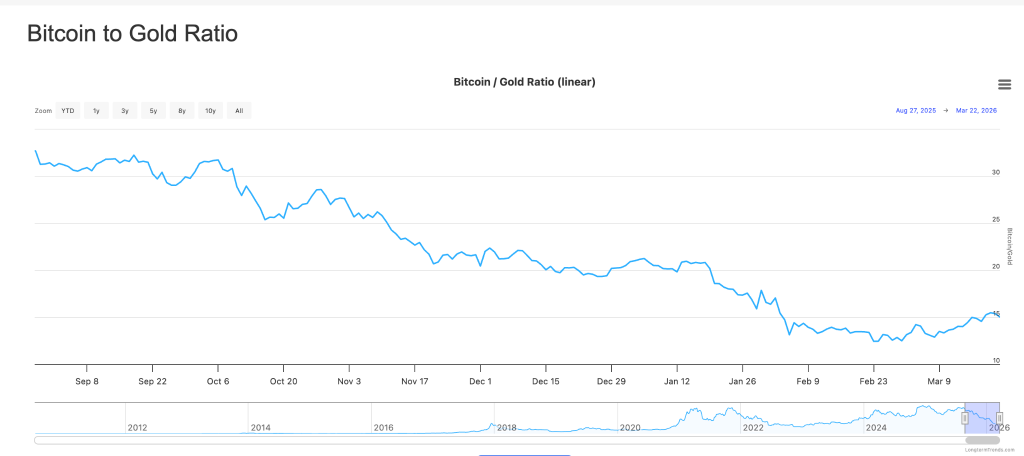
Correlation between Bitcoin and gold is not stable. It moves in cycles, influenced by the macro regime, institutional positioning, and whether or not crypto is experiencing its own idiosyncratic news.
Here is where things stand as of mid-March 2026: the 90-day correlation between BTC and gold has shifted from -0.27 to +0.29 over the past six months. That is a significant move. Six months ago, the two assets were weakly inversely correlated. Today, they are weakly positively correlated.
A +0.29 correlation is not high by any standard. Stocks and bonds during a risk-off episode might show correlations of +0.6 to +0.8. But the direction of the change matters. Going from negative to positive is a regime shift, and it tends to happen when institutional participants start treating Bitcoin as a macro hedge, not just a speculative tech bet.
The key caveat: this correlation shift is recent and fragile. If the Iran situation de-escalates, oil pulls back below $85, and the Fed signals rate cuts ahead of schedule, gold will likely sell off while Bitcoin reacts to its own flows. The correlation will probably collapse again.
The Iran War Factor: Why a Middle East Conflict Is Moving Bitcoin
On March 18, 2026, Bitcoin fell sharply toward $71,000 following reports of stepped-up attacks on Iran’s energy infrastructure, combined with a US February PPI reading that came in hotter than expected.
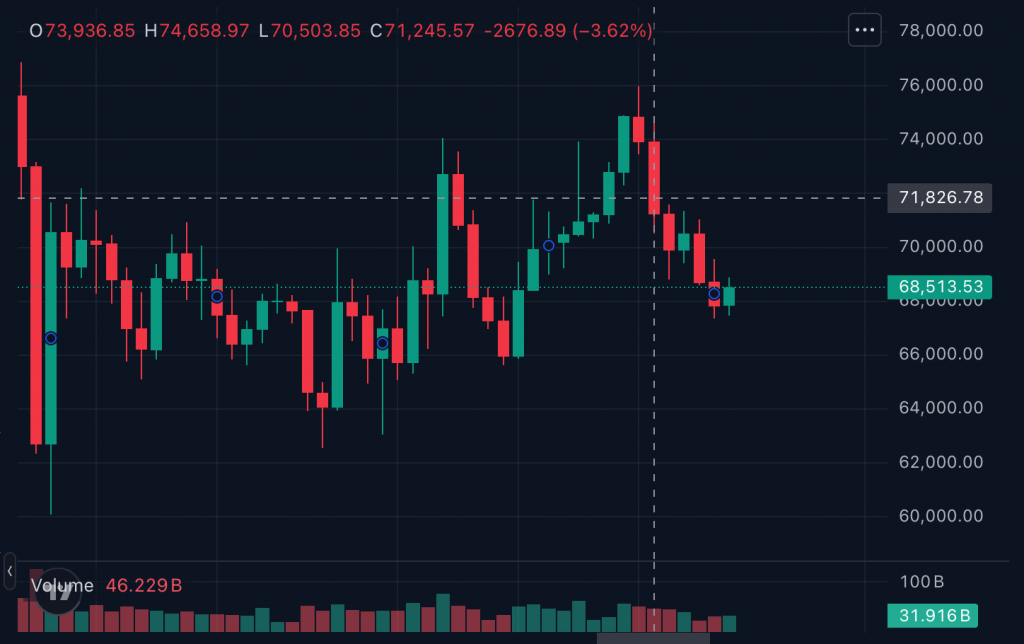
Oil swung back toward $100 a barrel. Gold and silver tumbled to their weakest levels since early February. Bitcoin dropped too, but held up relatively better than many traditional assets.
Bitcoin’s reaction to geopolitical stress did not follow the traditional safe-haven playbook, but its relative performance versus gold is the key signal. During the latest escalation, Bitcoin declined, but it held up better than gold and broader risk assets. This divergence matters more than absolute price movement.
Also read: Iran’s Crypto Economy, what traders need to know
Gold is expected to benefit from geopolitical risk, yet it weakened under inflation-driven rate expectations. Bitcoin also fell, but showed comparatively stronger resilience, suggesting that some institutional capital is beginning to treat it as a parallel macro hedge.
This does not confirm Bitcoin as a safe-haven asset. It highlights a shift in behavior: Bitcoin is starting to participate in macro positioning alongside gold, but not yet replacing it.
The current takeaway is clear: Bitcoin is not acting like gold, but it is no longer trading completely outside the same macro framework.
ETF Flows and Institutional Positioning
One of the structural arguments for why Bitcoin might increasingly behave like gold is the spot ETF ecosystem. When the spot Bitcoin ETFs launched in the US in early 2024, they gave institutional investors a way to hold Bitcoin with the same operational simplicity as holding GLD. That has, over time, started to create similar ownership patterns.
The data as of mid-March 2026 tells a mixed story. After eight consecutive weeks of net inflows into spot Bitcoin ETFs, flows have turned neutral: approximately negative $42 million cumulative over the past three days.
That is not a net outflow acceleration, but the momentum pause is notable. When ETF flows stall, Bitcoin tends to lose a near-term price support mechanism.
Compare this to gold ETFs, where the Iran conflict has continued to draw steady inflows from risk-averse capital. The institutional playbook has not fully switched from gold to Bitcoin. What is happening instead is that some institutions are holding both.
That bifurcated institutional positioning is actually consistent with the digital gold thesis playing out slowly. The thesis does not require Bitcoin to displace gold overnight. It requires Bitcoin to earn a growing share of the “hard asset” allocation in institutional portfolios over time.
On-Chain Signal: Whale Accumulation vs Retail Panic
On-chain data from the March 19 selloff offers one of the clearest signals in this debate.
The latest dip shows a clear split in behavior: retail exited, whales accumulated.
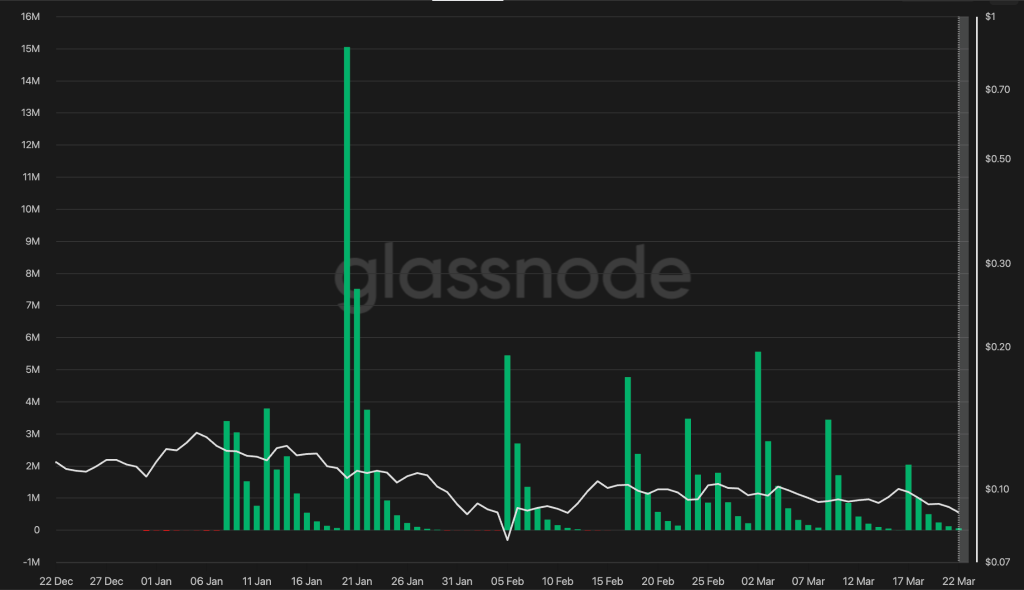
Exchange inflows jumped 23% in 24 hours to ~18,500 BTC, signalling short-term holders moving to sell. In contrast, wallets holding over 1,000 BTC added roughly 4,200 BTC during the same period, buying into weakness.
On the derivatives side, excess leverage was flushed out. Funding rates flipped negative to -0.008%, while open interest dropped by $2.1 billion, indicating forced liquidations rather than organic selling.
Despite the drawdown, the realized price sits near $54,000, leaving the average holder still ~25–30% in profit, which reduces structural sell pressure.
The signal is consistent: this was a positioning-driven dip, with long-term capital accumulating while short-term capital exited.
Final Thoughts
The digital gold thesis is not confirmed, but it is not dead either. The verdict so far is inconclusive. Bitcoin outperformed gold over a two-week window. Whales accumulated. The correlation shifted. But the rally was partly derivatives-driven, ETF flows have stalled, and Bitcoin still fell below $70,000 during peak stress. That is not the behavior of a fully mature safe-haven asset.
The more useful frame for most traders: Bitcoin and gold are playing different but increasingly overlapping roles in institutional portfolios. The thesis does not require Bitcoin to replace gold. It requires Bitcoin to earn a growing share of the macro hedge allocation over time. Based on what March 2026 has shown, that process is ongoing, not complete.
If the digital gold thesis is still playing out, then the edge isn’t in waiting for confirmation, it’s in positioning early while the narrative is still forming. Bitcoin may not behave like gold yet, but the signals are clear: institutional flows, accumulation patterns, and macro relevance are all building. If you believe Bitcoin earns a larger share of the “hard asset” allocation over time, the simplest move is to start accumulating.
Buy Bitcoin on WazirX and position yourself ahead of the shift.
FAQs
Gold may outperform Bitcoin in 2026 during periods of macro uncertainty, lower risk appetite, or declining liquidity, because it is historically seen as a safe-haven asset. However, Bitcoin can outperform in risk-on environments where liquidity expands and institutional inflows increase. Performance will depend on global interest rates, inflation trends, and capital flows.
Bitcoin’s price in 2026 is uncertain and depends on adoption, ETF inflows, macro liquidity, and regulatory clarity. Bullish projections often range between $80,000 and $200,000+, while bearish scenarios could keep it below previous highs. Bitcoin remains a high-volatility asset with wide price ranges rather than fixed forecasts.
Bitcoin and gold serve different investment roles. Bitcoin is a high-growth, high-volatility asset with strong upside potential driven by adoption and scarcity. Gold is a low-volatility store of value used for capital preservation and hedging. Bitcoin may outperform in growth cycles, while gold tends to perform better in risk-off environments.
Gold price projections for 2026 vary based on inflation, central bank policies, and geopolitical conditions. Estimates typically range between $2,200 and $3,500 per ounce in bullish scenarios, but actual prices depend heavily on macroeconomic stability and demand for safe-haven assets.
Bitcoin can potentially overtake gold in total market value if adoption continues to grow and it captures a larger share of global store-of-value demand. Gold’s market cap is currently much larger, so this would require sustained institutional inflows, broader global acceptance, and long-term trust in Bitcoin as “digital gold.”
 Disclaimer: Click Here to read the Disclaimer.