

Get WazirX News First
When talking about investing in crypto, discussions generally revolve around price, momentum and trends. One area that can be overlooked when it comes to investing in cryptos is the architecture of the token itself.
The “Tokenomics” of the token is an architecture that defines how the token is supplied, how it is distributed, how it unlocks and how it incentivises the ecosystem. All of these mechanics play an indirect role in liquidity, volatility and longevity of the project’s success. Therefore, if you are going to seriously evaluate the potential of a crypto to deliver the results you want, reading about Tokenomics is mandatory for basic due diligence.
This guide will outline how to read and evaluate supply, vesting schedules and incentive structures of a token in a structured and practical manner.
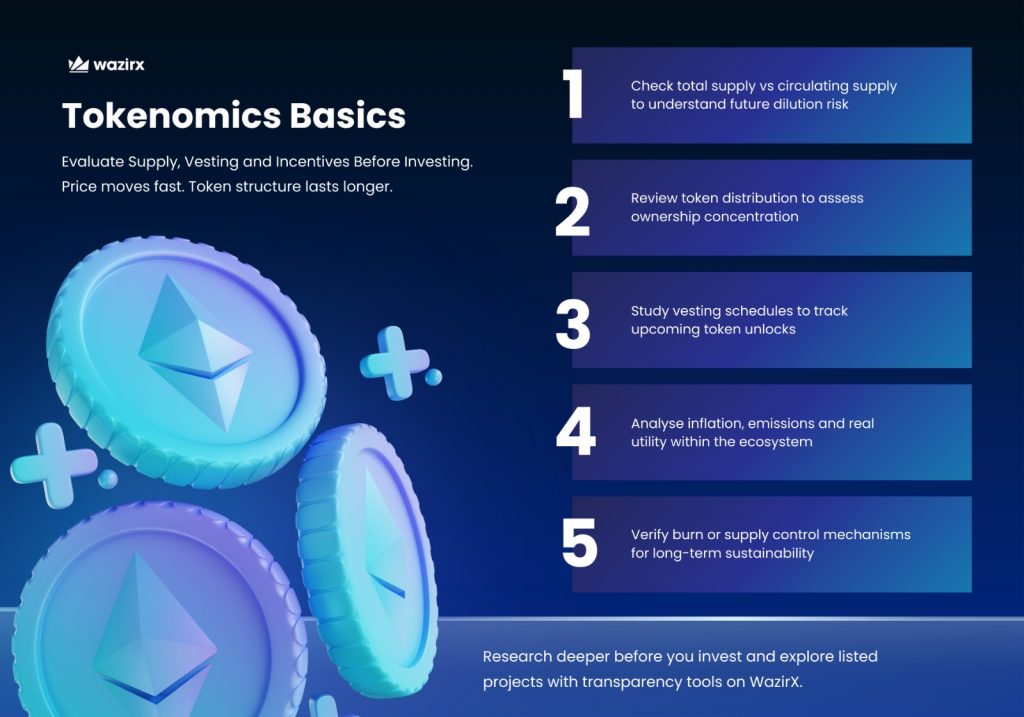
Begin with Supply: Understand What Exists and What Is Coming
All tokens publish supply information. On the surface, these numbers can seem straightforward; however, there are a number of issues that can develop from this information. Understanding what is credible regarding the token is key to evaluating any potential risk.
The total supply of tokens and the circulating supply are two of the most important pieces of information regarding a token’s supply.
Total supply refers to the maximum number of tokens that will ever exist. Circulating supply represents how many of those tokens are currently available in the market. The gap between the two indicates how much additional supply may enter circulation in the future.
The projected unlocking of some large percentage of the token supply will change the liquidity available (which could impact the risk of a project). Therefore, investors/traders need to be aware of the timeline of the potential dilution of the shares held by them.
Key Factors / General Assessments
- Percentage of the total supply that is currently in circulation
- Remaining locked supply
- Future projected issuance schedule
If there is clear reporting of supply by an issuer versus vague supply reporting, it can create further confidence from investors and less investor uncertainty.
Looking At Token Distribution – Who Gets The Tokens?
After looking at the supply of tokens, we then look at how the tokens are distributed relative to the supply. Most projects will distribute tokens to the founders, early investors, advisors, ecosystem-related incentives/rewards, treasury or reserve tokens and community rewards. The structure then shows the concentration of ownership for the various types of stakeholders.
High concentrations of ownership can create selling pressure when tokens vest. On the other hand, a more balanced structure supports decentralisation and long-term agreement between token holders.
When evaluating crypto projects on sites such as WazirX, it is critical to go beyond the listing page and seek out the official token distribution charts issued by the project teams themselves. Working with exchanges is only one-half of the process of responsible investing and should include independent verification of value.
Concentrations of ownership can significantly affect long-term stability and acceleration of value in comparison to short-term price movement.
Comprehend Vesting: Timing Influences Market Effects
Vesting schedules establish when locked tokens become available for use.
Serious companies often encrypt their portions of tokens for a specific period of time. After they have been blocked for that period of time, the team members will release them slowly over a period of several months or years; some companies will also unlock portions of their team members at certain stages after they have achieved specific milestones.
Token Releases and Why They Matter
Large unlocks can create extra supply in the market in a small amount of time and therefore change both liquidity and market sentiment on a temporary basis. In contrast, gradual releases tend to create a more gradual increase in supply.
When reading through vesting documentation, consider:
- Length of lock periods
- The total amount of tokens that will soon be released
- Are the releases spread out or concentrated
- Is the project transparent about the length of time it expects to vest the tokens
By following the vesting schedules on the project, you may be able to estimate future increases in supply rather than just react once they occur.
Analyse the Inflation/Emission Models
Not all tokens have a capped issuance rate. Many blockchains create new tokens to incentivise their validators, stakers or users over time.
Not all inflations are bad, as the way inflation is structured matters significantly. However, having an inflation and emission model can help align the interests of all stakeholders, including token holders.
An acceptable emission/ inflation model would include:
- The total number of tokens to be issued every year
- The rate at which new tokens will be issued over the years
- The purpose of creating new tokens
If new supply grows faster than network usage, dilution risk increases. If token issuance supports ecosystem growth and participation, it may strengthen network activity.
Understanding emission design provides insight into how supply will evolve over the coming years.
Assess Incentives and Real Utility
A token should serve a defined role within its ecosystem.
Common utility functions include governance participation, transaction fee discounts, staking rewards and access to platform features. The strength of these utilities determines whether demand is driven by usage or speculation.
The essential components of healthy tokenomics are to incentivise all parties involved in a healthy ecosystem: users, developers, and long-term participants. If one ecosystem player creates value for many stakeholders, the purpose and sustainability of the token become clear.
When considering token utility, consider the following questions:
- Does the token need to be used for the fundamental activities of the platform?
- Are there any real benefits of holding other than potential upside appreciation?
- Are the incentives designed to reward the long-term user of the ecosystem?
Actual utility will frequently outlast market cycles.
Seek Supply Control Mechanisms
Some projects have implemented mechanisms such as token burn or buyback programs to reduce total supply. These mechanisms support true long-term scarcity but must be both consistent and transparent.
The occasional promotional burn does not affect the underlying fundamentals of a token. Sustainable supply control is best aligned with metrics of revenue-generating activities in the ecosystem.
Investors should verify and document that anticipated burn rates and schedules are predictable; therefore, it cannot be a kind of discretionary action.
A Structured Tokenomics Checklist
Before investing in any crypto asset, these questions should be evaluated:
- Total Circulating Supply
- Total number of tokens with scheduled unlocks
- Balance of allocation between the insiders and the community
- Documented emission and inflation rates
- Clarity of purpose and necessity of the token’s utility
- Consistency of supply control mechanisms
- Availability of verifiable accounting documents to confirm stated practices
When several of these items are either unclear or unavailable, further and deeper diligence is required.
Final Thoughts
Tokenomics defines the economic foundation of a crypto project. Supply mechanics, vesting schedules and incentive structures influence how value is distributed and sustained over time.
While price movements attract attention, long-term performance is often shaped by underlying design. Investors who take the time to read tokenomics carefully position themselves to make more informed decisions.
In a market that continues to evolve, disciplined evaluation remains one of the strongest advantages an investor can have.
 Disclaimer: Click Here to read the Disclaimer.