

On November 24, Brent crude fell to $88.10 a barrel, its lowest price in nearly three months, before recovering to $91.40. Expectations of rising global oil supplies had been weighing on prices, but fresh reports of attacks on ships near the Strait of Hormuz helped reverse the decline.
To understand why shipping concerns can have such an immediate effect on oil prices, it helps to understand the business of moving crude from oil fields to refineries.
-
Brent and WTI recovered nearly 4% from their intraday lows on November 24.
-
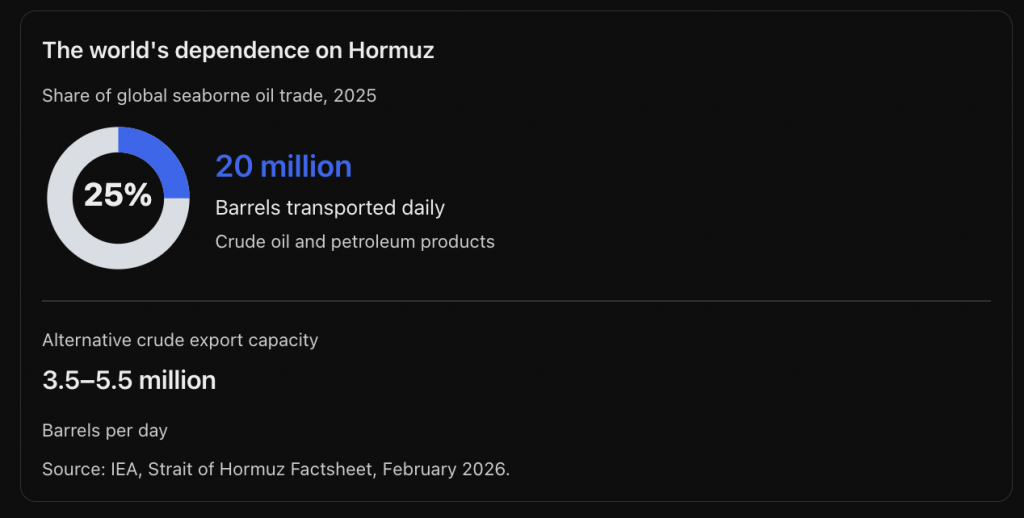
Around a quarter of the world’s seaborne oil trade passed through the Strait of Hormuz in 2025, with limited alternative export routes.
-
Shipping risks can affect oil prices through higher transportation costs, competition for alternative supplies, and expectations of future delivery problem.
Why a Narrow Stretch of Water Matters to the Oil Market
Oil production is concentrated in a handful of regions, but oil consumption is spread across the world. The two are connected by an extensive network of pipelines, ports, and shipping routes.’
One of the most important points in that network is the Strait of Hormuz, a narrow passage between Iran and Oman through which oil tankers leave the Persian Gulf.
According to the International Energy Agency (IEA), around 20 million barrels of crude oil and petroleum products passed through the Strait every day in 2025.
That accounted for approximately 25% of the world’s seaborne oil trade.
Saudi Arabia and the United Arab Emirates have pipelines that allow some oil exports to bypass the Strait. But these routes have limited capacity.
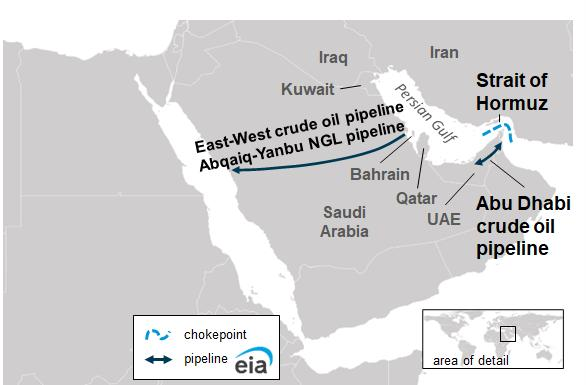
For countries such as Iraq and Kuwait, access to the Strait is particularly important because most of their oil exports depend on it.
The problem, therefore, isn’t necessarily a lack of oil. It’s the limited number of ways in which that oil can reach the people buying it.
Read more: When Hormuz tensions pushed Brent crude above $100
What Happens to the Cost of a Barrel When Shipping Becomes Risky?
There are several businesses involved in getting a barrel of crude oil from a producer to a refinery. Each has its own costs and commercial risks.
When a shipping route becomes dangerous, the economics of these businesses can change.
Tanker operators
Shipping companies may demand higher freight charges to transport oil through risky waters. Some may choose not to accept shipments through the affected region at all, reducing the number of tankers available to exporters.
Marine insurers
Oil tankers and their cargo need insurance. When the risk of damage or loss increases, insurers may charge additional premiums for ships entering the affected waters.
These are commonly known as war-risk premiums.
Oil importers
Importers must either absorb the higher transportation costs, negotiate with suppliers, or look for crude from other production regions.
The longer a disruption lasts, the more difficult these choices can become.
Consider what an importer might pay for a barrel of oil under two different shipping conditions.
| Cost per barrel | Normal conditions | Higher shipping risk |
| Crude oil | $85.00 | $85.00 |
| Tanker freight | $2.00 | $3.50 |
| Insurance and related costs | $0.50 | $1.50 |
| Delivered cost | $87.50 | $90.00 |
Illustrative figures.
The producer is still receiving $85 for the barrel. But getting that barrel to the refinery now costs the buyer an additional $2.50.
Depending on the terms of the sale, some of these additional costs could also be borne by the producer.
How a Shipping Problem in the Middle East Can Affect Oil Prices Elsewhere
Refineries cannot always afford to wait for shipping conditions to improve. They need crude to continue producing petrol, diesel, aviation fuel, and other petroleum products.
An Indian refinery concerned about shipments from the Persian Gulf might consider buying more crude from West Africa or the United States, provided the available grades are suitable for its equipment.
But what happens when several refineries start looking for alternative suppliers at the same time?
Producers outside the affected region may find themselves with more buyers competing for their oil.
They may be able to charge higher prices even though their own production and transportation costs haven’t changed.
How Regional Shipping Risks Can Spread
Illustrative mechanism. The actual price impact depends on the scale and duration of the disruption.
This is particularly relevant to Asian economies. In 2025, China and India alone accounted for 44% of crude oil exports passing through Hormuz, according to the IEA.
A regional shipping problem can consequently change the demand for oil produced thousands of kilometers away.
Why Oil Prices Can Rise Before Shipments Are Disrupted
For a refinery, an interrupted supply of crude can mean an interrupted business. Waiting until a shipment is delayed to secure alternative supplies could prove expensive.
This is one reason businesses use oil futures.
An importer concerned that crude prices might rise over the next few weeks could buy futures contracts today. If crude becomes more expensive, gains on those contracts may help offset some of the higher cost of purchasing physical oil.
Read more: How the same hedging principle works in crypto futures
Financial traders, meanwhile, may buy futures based on similar expectations without having any involvement in the physical oil business.
This creates buying pressure based on what market participants expect a disruption to cost, even before those costs materialize.
The November 24 recovery is consistent with such a repricing of risk, although the price movement alone cannot establish how much came from importers protecting themselves, financial traders opening positions, or traders closing existing short positions.
What Happens If Shipping Conditions Improve?
Much depends on whether the underlying expectations of oil supply and demand have changed.
If shipping risks ease while global production remains strong, some of the additional costs and supply concerns supporting oil prices could recede.
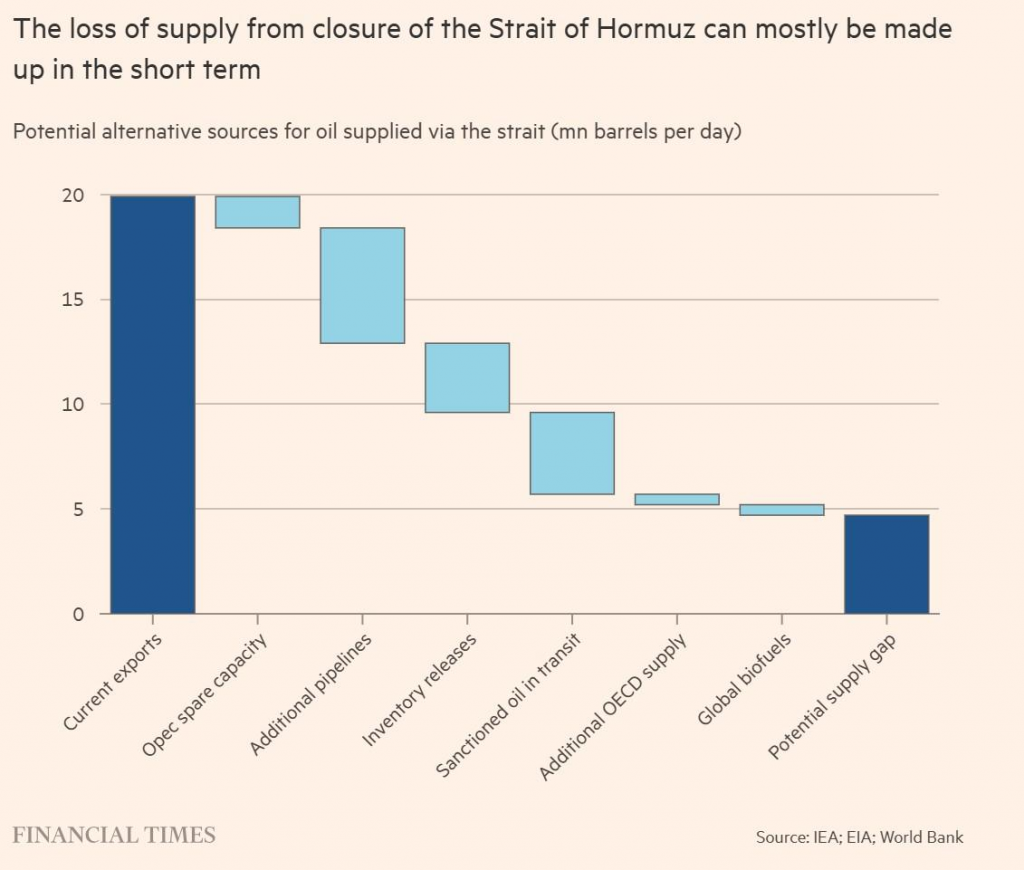
However, a prolonged disruption could have consequences beyond transportation. Exporters with limited storage capacity may eventually have to reduce production if they cannot ship enough oil.
What started as a problem of moving oil could then become a problem of producing enough of it.
Final Thoughts
The economics of crude oil extend well beyond the oil field. Tanker availability, insurance, refinery operations, and geography can all influence what a buyer is willing to pay for a barrel.
For traders following Brent crude, developments along major shipping routes can therefore be as relevant as announcements from oil producers.
Ever considered trading Brent crude alongside your crypto portfolio? BZ perpetual futures on WazirX offer exposure to oil price movements without managing monthly contract expiries or opening a separate commodity trading account, with the flexibility to take long or short positions.
Frequently Asked Questions
Renewed shipping-security concerns near the Strait of Hormuz helped crude oil prices recover despite expectations of growing global supplies.
Approximately 25% of global seaborne oil trade passed through the Strait in 2025. Limited alternative export capacity makes disruptions particularly consequential.
An additional insurance charge for transporting ships and cargo through areas exposed to war, armed conflict, or related security threats.
Yes. Higher freight and insurance costs can increase delivered oil prices, while demand for alternative supplies can put upward pressure on crude prices elsewhere.
Perpetual futures reference oil prices without a scheduled monthly expiry. They have their own funding mechanisms, pricing arrangements, margin requirements, and liquidation risks.
 Disclaimer: Click Here to read the Disclaimer.