
Synopsis: Crypto perpetual futures are derivatives that let traders bet on a cryptocurrency’s price going up or down without any expiry date. Positions can stay open indefinitely, and a periodic funding payment between traders keeps the futures price closely aligned with the spot market.
TL;DR
- Perps or Perpetual futures allow trading with leverage and have no expiry date; key mechanisms include the funding rate to keep the contract price near the spot price, and the mark price (not the last traded price) which determines unrealized PnL and triggers liquidation.
- Traders can choose between isolated margin, where risk is limited to the allocated amount, and cross margin, where the entire wallet balance backs the position; liquidation is an automatic process that occurs when margin falls below the maintenance level and can happen rapidly during sharp market movements.
- Perpetual futures are the most actively traded crypto instrument globally, often surpassing spot trading volume on major exchanges, although in India, profits from these derivatives are subject to a flat 30% tax with no allowance for loss set-off.
What Is a Perpetual Futures Contract?
Main guide: Crypto Futures Trading
A perpetual futures contract, commonly called a “perp”, is a crypto derivative that lets you speculate on the price of a cryptocurrency without ever owning the actual coin. Unlike a traditional futures contract, it has no expiry date. You can hold the position for minutes or months, as long as you maintain sufficient margin.
Perps were invented specifically for crypto markets. BitMEX introduced the mechanism in 2016, and it has since become the dominant trading instrument across the industry.
The global perpetual futures market consistently dwarfs spot trading volume, on some days, perps trade three to five times the volume of the underlying spot market.
The core appeal for Crypto perpetual futures is its leverage.
With a fraction of the trade value deposited as margin, you control a much larger position.
A ₹10,000 margin deposit at 10x leverage controls a ₹1,00,000 position.
- If the price moves 5% in your favour, you earn ₹5,000, which is a 50% return on your margin.
- If it moves 5% against you, half your margin is gone.
Understanding how every mechanical part of a perpetual futures contract works is not optional before trading. The sections below cover each component precisely.
How Perpetual Futures Differ from Spot Trading
Main guide: Spot vs Futures Trading in Crypto
In spot trading, you buy or sell the actual cryptocurrency. Ownership transfers immediately. Your maximum loss is the amount you invested.
Perpetual futures work differently across every dimension:
| Spot Trading | Perpetual Futures | |
| Asset ownership | Yes, you hold the coin | No, you hold a contract |
| Leverage | None (1x) | Up to 10x–125x |
| Expiry | None | None |
| Funding rate | None | Every 8 hours |
| Profit from price drops | Not natively | Yes, go short |
| Liquidation risk | None | Yes |
| Max loss | Amount invested | Can exceed margin without stop-loss |
The Core Mechanism: How a Perp Trade Works
When you open a perpetual futures position, you are not buying or selling Bitcoin. You are entering a contract with the exchange (or with the exchange’s liquidity pool) that pays out based on how Bitcoin’s price moves relative to your entry price.
Going long means you profit if the price rises above your entry. Going short means you profit if the price falls below your entry. In both cases, your gain or loss is calculated as:
PnL = (Exit Price − Entry Price) × Position Size (for a long) PnL = (Entry Price − Exit Price) × Position Size (for a short)
Leverage multiplies this outcome relative to your margin. At 10x leverage, a 1% price move in your favour doubles as a 10% gain on your margin. A 1% adverse move is a 10% loss on your margin.
This is why leverage is the most misunderstood concept in futures trading. It does not reduce the dollar amount of risk: it concentrates it.
A 10x position carries the same absolute dollar volatility as a 1x position ten times the size. The only difference is that your margin is ten times smaller, so the same price movement has ten times the impact on your account.
Funding Rate: The Price Anchor That Keeps Perps Honest
Main guide: Funding rate in Crypto Futures
Because perpetual contracts have no expiry, they need a mechanism to prevent the contract price from drifting too far from the underlying spot price. This mechanism is the funding rate.
The funding rate is a periodic payment exchanged directly between long and short position holders. The exchange does not take this payment, it simply facilitates the transfer. It resets every 8 hours on most platforms (at 00:00, 08:00, and 16:00 UTC).
How the direction works:
- When the perpetual price is trading above spot → funding rate is positive → longs pay shorts. This incentivises traders to short the perp (pushing its price down toward spot) and disincentivises new longs.
- When the perpetual price is trading below spot → funding rate is negative → shorts pay longs. This incentivises going long and pushes the perp price back up toward spot.
The market self-corrects through economic incentives rather than mechanical expiry.
The funding rate formula (simplified):
Funding Rate = Clamp (Premium Index + Interest Rate, −0.75%, 0.75%)
The premium index measures how far the perp price is from the spot price. The interest rate is typically 0.01% per 8-hour period (approximately 0.03% per day). Most exchanges cap the funding rate at ±0.75% per interval to prevent extreme charges during volatile periods.
What the funding rate costs you in practice:
At a 0.05% funding rate per 8 hours (a moderately elevated rate in a bull market):
- Per day: 0.15%
- Per week: 1.05%
- Per month: ~4.5%
On a ₹1,00,000 long position, that is ₹4,500 per month just to hold:before any price movement. Traders who ignore funding costs and hold large leveraged positions for weeks are routinely surprised by how much funding erodes their gains.
In strongly trending markets, funding rates can spike much higher: to 0.1%, 0.2%, or beyond per interval: making holding leveraged positions in the dominant direction extremely expensive.
Mark Price vs Last Traded Price
Main guide: What is Mark Price in Crypto
There are two prices you see in perpetual futures:
- Last traded price (LTP): The most recent actual trade execution on that exchange. It can be temporarily pushed by a large market order, a low-liquidity wick, or a wash trade.
- Mark price: A calculated fair value derived from a composite of spot prices across multiple major exchanges, plus a moving average of the funding premium. It represents the true market-wide value of the contract at any point.
The mark price is critical for two reasons:
- Your unrealised PnL is calculated using mark price, not LTP. If a brief wick pushes LTP 3% lower but mark price only moves 0.5%, your account shows a smaller loss, reflecting actual fair value, not a momentary anomaly.
- Liquidation is triggered by mark price. This prevents exchanges from using artificial wicks to force-liquidate positions. Even if the last traded price briefly touches your liquidation level, your position will not be closed unless the mark price reaches that level.
Understanding this distinction matters when you set your stop-losses and calculate your liquidation distance. Always use mark price, and not LTP, as the reference for risk calculations.
Margin: Initial, Maintenance, and the Two Modes
Main guide: Margin in Crypto Futures
Margin in crypto futures is the collateral you deposit to open and maintain a leveraged position. There are two types and two modes.
Initial Margin vs Maintenance Margin
- Initial margin is the minimum deposit required to open a position. At 10x leverage, the initial margin is 10% of the position’s notional value.
- Maintenance margin is the minimum balance required to keep the position open: typically 0.5–1% of the notional value depending on the exchange and contract. If your margin falls below this level, liquidation is triggered.
The gap between initial margin and maintenance margin is your buffer: the cushion that absorbs adverse price movement before liquidation.
For beginners, isolated margin is strongly recommended. It forces you to define your maximum loss on each trade explicitly before entering. Cross margin is better suited for experienced traders actively managing a portfolio of positions with explicit total risk controls.
Also read: Isolated Margin vs Cross Margin
Liquidation: What It Is and How to Avoid It
Main guide: liquidation in Crypto futures
Liquidation is the forced automatic closure of your position by the exchange when your margin falls below the maintenance threshold.
When liquidation is triggered:
- The exchange’s liquidation engine takes over your position.
- Your remaining margin is used to close the position at the best available price.
- In isolated margin mode, you lose the margin allocated to that position.
- In some exchanges, an insurance fund absorbs losses if liquidation occurs below your bankruptcy price. If the insurance fund cannot cover the deficit, auto-deleveraging (ADL) kicks in where profitable traders on the opposite side are force-reduced to cover the shortfall.
Your liquidation price can be calculated approximately as:
- For a long position (isolated margin): Liquidation Price ≈ Entry Price × (1 − Initial Margin Rate + Maintenance Margin Rate)
- For a short position (isolated margin): Liquidation Price ≈ Entry Price × (1 + Initial Margin Rate − Maintenance Margin Rate)
Example: Long BTC at 10x leverage:
- Entry: ₹80,00,000
- Initial margin: 10% → ₹8,00,000
- Maintenance margin: 0.5%
- Liquidation price ≈ ₹80,00,000 × (1 − 0.10 + 0.005) = ₹72,40,000
A ~9.5% drop from entry triggers liquidation. At 20x leverage on the same trade, the liquidation distance shrinks to roughly 4.75%. At 50x, it is under 2%.
This is why high leverage is dangerous in a volatile 24/7 market that can move 5–10% in minutes.
Going Long vs Going Short: Mechanics and Use Cases
Going long is a bet that prices will rise. You open a long, pay funding if the rate is positive, and profit as the mark price rises above your entry.
Going short is a bet that prices will fall. You open a short, receive funding if the rate is positive (longs pay you), and profit as the mark price falls below your entry.
Shorting is one of the key capabilities perpetual futures offer that spot trading does not. It has two main legitimate use cases:
- Speculation: You expect a coin to decline and want to profit from that view.
- Hedging: You hold a large spot position and want to protect its value during a downturn without selling your holdings. Opening a short futures position of equal size creates a hedge: gains from the short offset losses in your spot portfolio.
Shorting with high leverage during a sudden market recovery (a short squeeze) is one of the fastest ways to get liquidated. When a heavily shorted asset begins rising, short sellers are forced to close their positions, which means buying, which accelerates the price rise further. This cascade is called a short squeeze and can wipe out a heavily leveraged short position in minutes.
Open Interest: Reading Market Sentiment
Main guide: Open Interest in Crypto Trading
Open interest is the total number of outstanding (unclosed) perpetual futures contracts at any given time. It tells you how much capital is currently committed to directional bets in the market.
Key readings:
- Rising OI + rising price: New money is entering long positions: trend likely to continue.
- Rising OI + falling price: New money is entering short positions: bearish momentum building.
- Falling OI + rising price: Short sellers are closing (short squeeze) — upward move may be exhausted.
- Falling OI + falling price: Long sellers are cutting positions — downward move may be losing steam.
Open interest is not a standalone signal, but in combination with price action and funding rate data, it provides meaningful context for reading whether a move has conviction behind it or is running on fumes.
Fees in Perpetual Futures
Trading perps costs money in two ways:
- Maker/taker fees: Charged on every order. Makers (limit orders that add liquidity to the order book) typically pay lower fees: 0.01–0.02%. Takers (market orders that remove liquidity) typically pay more: 0.03–0.06%. On a ₹1,00,000 position, a taker fee of 0.05% is ₹50 per trade (entry and exit combined: ₹100).
- Funding rate: As described above: a recurring cost of holding the position, charged every 8 hours. In neutral markets, funding is near zero and largely irrelevant for short-term traders. In trending markets, it is a meaningful expense for anyone holding for more than a day.
Combined, fees in perp trading are manageable for active traders but material for long-duration holders with leveraged positions. Always calculate your break-even price including both fee types before sizing a trade.
Interested in giving crypto futures trading a try? WazirX is bringing to you the easiest and the most seamless Crypto Futures trading experience that you could experience. Trade with upto 20x leverage using INR.
Frequently Asked Questions
A perpetual futures contract is a derivative instrument that tracks the price of a cryptocurrency and allows you to trade with leverage, with no expiry date. You can hold the position indefinitely as long as you maintain the required margin. It is the most widely traded crypto instrument globally.
A regular (traditional) futures contract expires on a fixed date and settles automatically. A perpetual contract has no expiry, you can hold it as long as your margin allows. Perpetuals use a funding rate to stay anchored to spot prices; traditional futures use basis convergence at expiry. See the full comparison in our traditional vs perpetual futures guide.
The funding rate is a periodic payment between long and short holders of a perpetual contract, settling every 8 hours. Whether you pay or receive depends on the rate direction and your position. If the rate is positive and you are long, you pay. If you are short, you receive. If the rate is negative, the opposite applies. In quiet, neutral markets the rate is close to zero. In strongly trending markets it can become a significant cost.
Liquidation means the exchange automatically closes your position because your margin fell below the maintenance threshold. You lose the margin allocated to that position (in isolated mode). Liquidation is triggered by the mark price and not the last traded price, to prevent manipulation. Setting a stop-loss above your liquidation price is the standard way to exit before liquidation occurs.
Isolated margin limits your loss to the amount you specifically allocate to one position, the rest of your wallet is protected. Cross margin uses your entire wallet balance as collateral for all positions simultaneously. Isolated margin is recommended for beginners because it makes risk per trade explicit and bounded.
In isolated margin mode, your maximum loss is the margin allocated to that position. In cross margin mode, a losing position can draw from your entire wallet balance, potentially zeroing your account. Both modes carry the risk of full margin loss on a bad trade; cross margin carries the additional risk of total account loss.
Open interest is the total number of active, unclosed contracts in the market at any moment. Rising open interest alongside rising prices suggests new long positions are being added: a sign of sustained bullish conviction. Falling open interest during a rally often signals short covering rather than new buying, the move may be less sustainable.
This article is for informational purposes only and does not constitute financial or investment advice. Perpetual futures trading involves significant risk of loss, including the loss of your entire margin. Please conduct your own research and consult a financial advisor before trading derivatives.
Learn More on Crypto Futures Trading
-
Tokenized Gold Explained: XAUT, PAXG, & The $5.3B Market
-
SpaceX’s Sep 9 Lockup Expiration: What It Actually Means
-
RWA Tokenization Market 2026: Size, Growth, and BlackRock’s Role
-
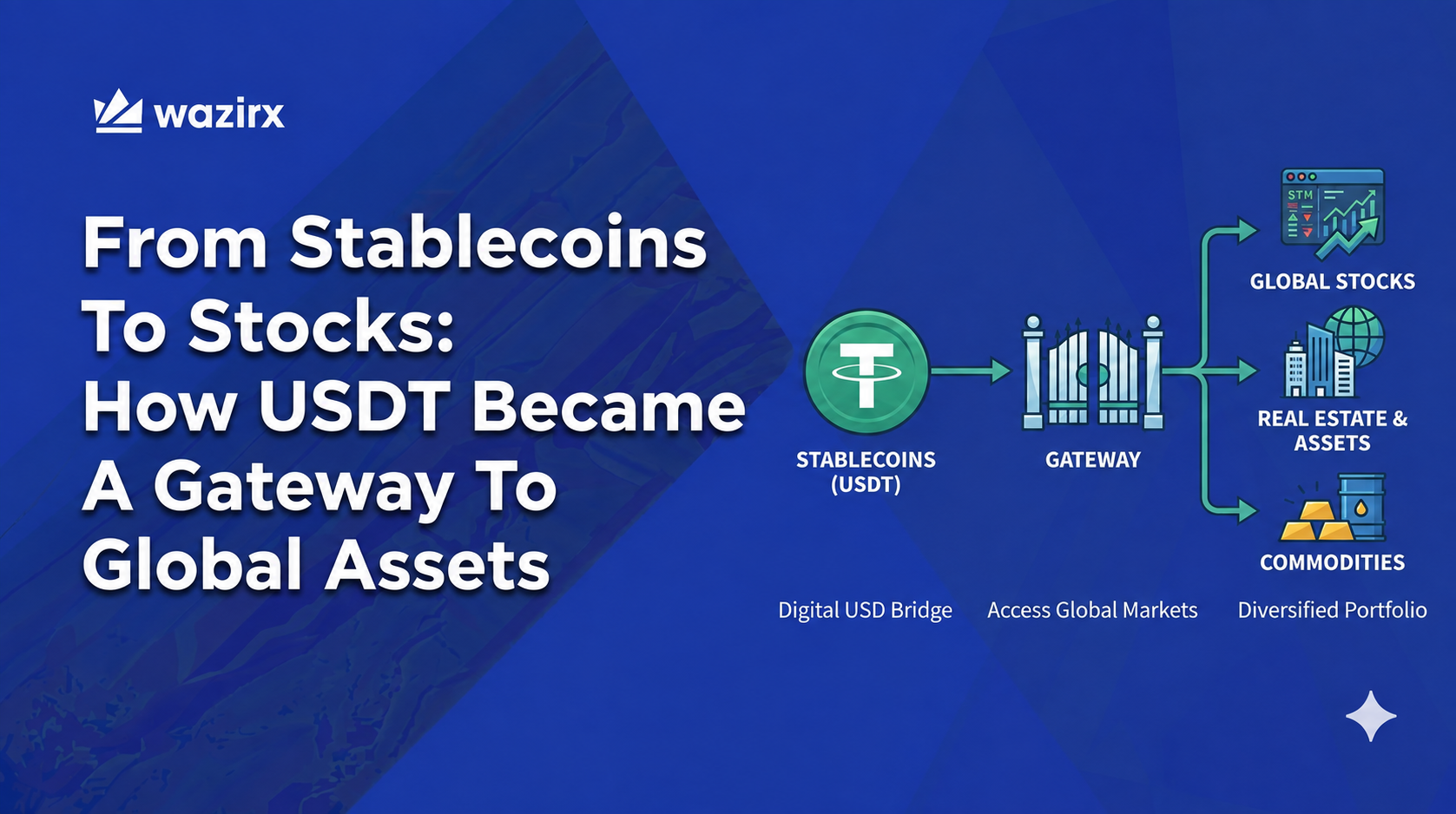
From Stablecoins To Stocks: How USDT Became A Gateway To Global Assets