
Ask five different crypto traders in India which wallet they use, and you will probably get five different answers, followed by five different reasons why theirs is the right one. That is because there is no single best crypto wallet in India. There is only the wallet that fits how you actually trade, how much you hold, and how much friction you are willing to deal with to keep it safe. This guide is here to help you figure out which one that is, not to push you toward a specific product.
Start With What a Wallet Actually Does
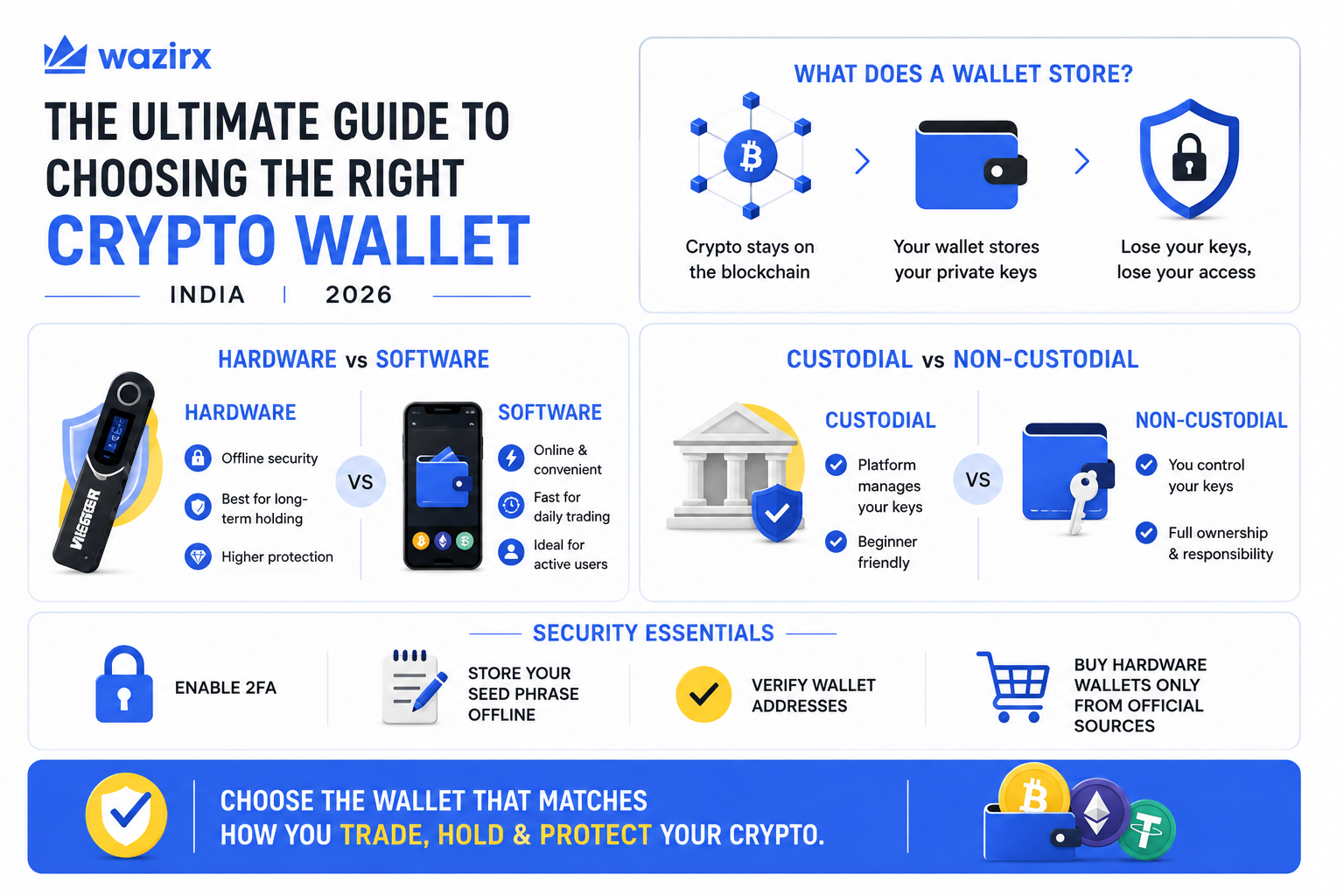
A lot of new traders assume a wallet stores their coins, the same way a physical wallet holds cash. It does not work that way. Your crypto lives on the blockchain. What a wallet actually holds are your private keys, the cryptographic proof that you own a particular address and can move whatever is sitting in it. Lose the keys, and you lose access, even if the coins are technically still there. That single fact is why wallet security gets talked about so much, and why it deserves more thought than most people give it.
Hardware Wallet vs Software Wallet: The Core Decision
This is where most of the confusion starts, so let us untangle it properly.
Hardware wallets are physical devices that keep your private keys completely offline. Think of them as a small vault you plug in only when you need to sign a transaction. Since the keys never touch the internet, hardware wallets are considered the gold standard for long-term storage, particularly if you are sitting on a large position you do not plan to touch for months. The tradeoff is convenience. You need the physical device on hand, and setting one up correctly takes a bit more patience than downloading an app.
Software wallets, sometimes called hot wallets, live on your phone, desktop, or browser. They are connected to the internet, which makes them faster and more convenient for everyday trading, moving funds, or interacting with different platforms. The tradeoff here is exposure. Since they are always online, they carry more risk if your device is compromised through malware, phishing, or a weak password.
Neither is objectively better. A trader who moves funds daily has different needs than someone parking a chunk of savings for two years. Most experienced holders in India end up using both, a software wallet for active trading and a hardware wallet for anything they plan to hold long term.
Custodial vs Non-Custodial: The Question People Forget to Ask
There is a second, quieter decision buried inside every wallet choice: who actually controls the keys?
A custodial wallet, the kind you get automatically when you sign up on an exchange, is managed on your behalf. You do not have to memorize a seed phrase or worry about losing a device, because the platform handles key security. This is genuinely convenient, and for a lot of Indian traders, especially beginners, it is where they start. When you buy Bitcoin or any other crypto through WazirX, your holdings sit in this kind of managed environment, which removes a lot of the operational risk that trips up first-time users.
A non-custodial wallet puts you fully in charge. You hold the seed phrase, you hold the responsibility, and nobody can recover your funds for you if something goes wrong. It offers more control, but that control comes with zero safety net.
Most seasoned traders do not pick one over the other. They use an exchange wallet for liquidity and active trading, and shift long-term holdings into a non-custodial or hardware setup once the amount involved justifies the extra step.
What Actually Makes a Crypto Wallet Secure
Regardless of which type you lean toward, a few habits matter more than the brand name on the wallet itself.
- Write down your seed phrase on paper. Never save it as a screenshot, phone note, or cloud document.
- Enable two-factor authentication (2FA). Turn on 2FA wherever it’s available to add an extra layer of protection.
- Verify wallet addresses before every transaction. Blockchain transfers are irreversible, so always double-check the recipient’s address.
- Buy hardware wallets only from the official manufacturer. Avoid second-hand or third-party sellers, as some devices have been found pre-loaded with compromised seed phrases.
- Treat your seed phrase like your most valuable asset. Anyone with access to it can control your crypto holdings, so store it securely and never share it with anyone.
Building Your Own Setup for 2026
There is no universal answer to which wallet is right for you, and honestly, anyone who tells you there is one has probably not thought it through. What matters is matching the wallet to your actual behavior. If you are actively trading, a reliable exchange-based wallet like the one built into WazirX keeps things simple and liquid. If you are holding for the long term, pairing that with a hardware wallet adds a layer of protection that active trading setups simply cannot match.
Take the time to read up on the basics before you commit to any single approach. WazirX’s Blogs are a decent place to start if you want to understand wallet security, seed phrases, and custody in plain language before making a decision that affects how safely your crypto sits, today and years from now.
 Disclaimer: Click Here to read the Disclaimer.