
After a 2-day meeting, the Federal Open Market Committee voted unanimously, 12-0, to raise the target range for the federal funds rate by 25 basis points, from 3.50%-3.75%, to 3.75%-4%.
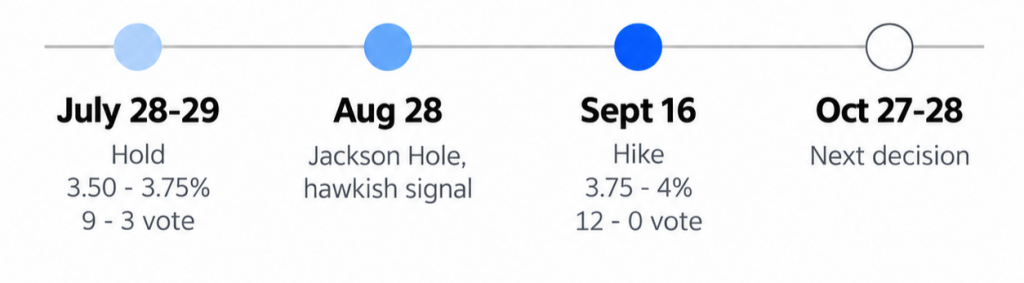
This was the first rate increase since 2023, and a reversal from a run of five consecutive meetings in which the committee had left rates unchanged.
What exactly happened?
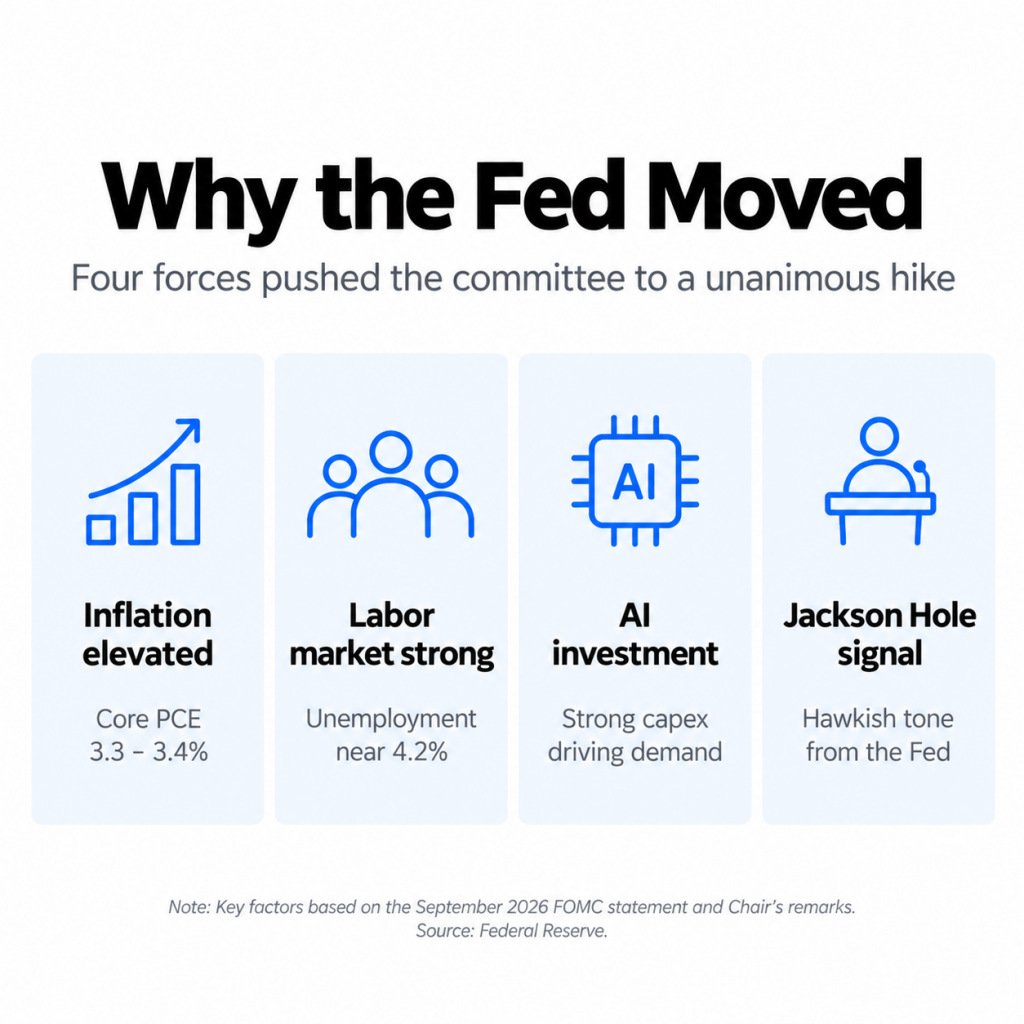
The post-meeting statement said inflation “remains elevated,” and that the hike would “support a timelier return to the Committee’s 2 percent goal.”
At his press conference, Fed Chair Kevin Warsh said inflation had been “too high … for too long,” and that the committee needed to be confident inflation was moving toward target “clearly and at sufficient speed” before it could hold off. He added that “today, the FOMC decided that this standard has not been satisfied.”
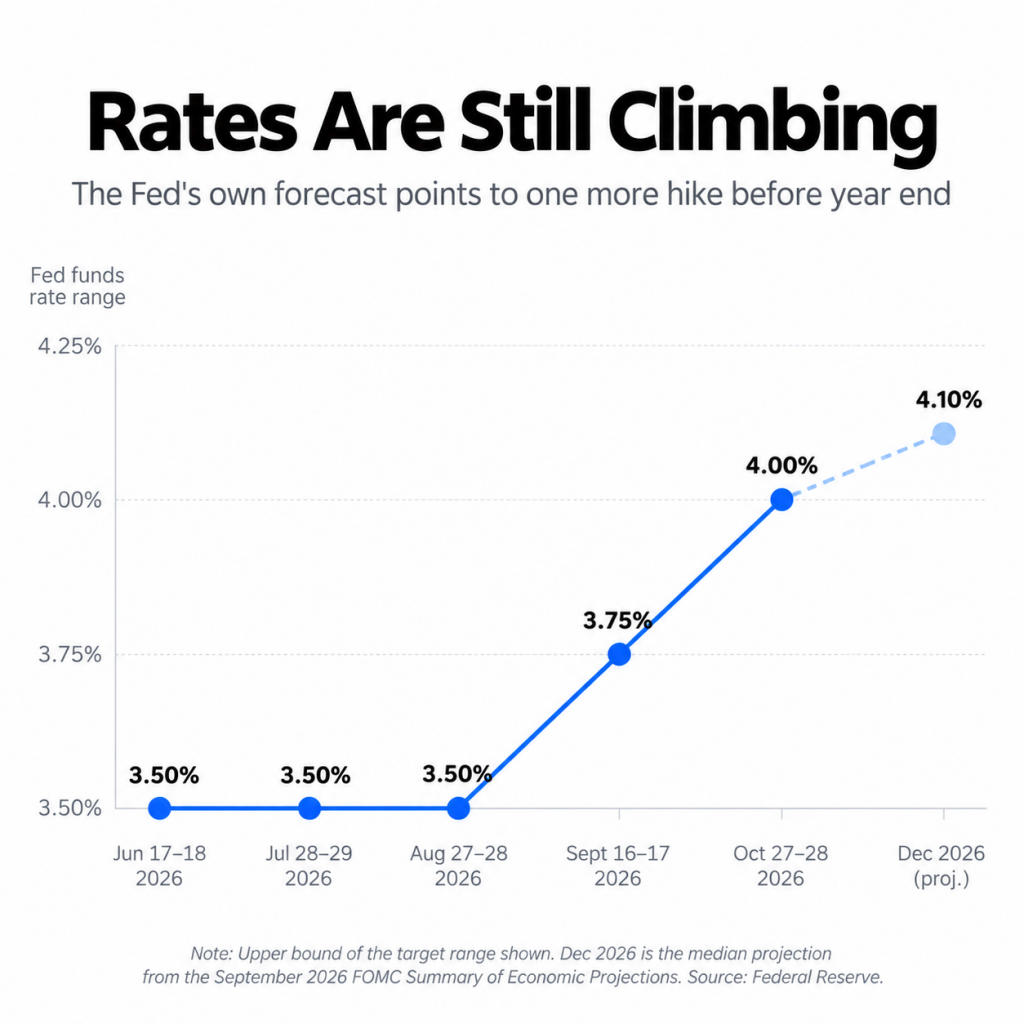
The Summary of Economic Projections released alongside the decision showed most officials expect one more hike before year end, putting the median rate at 4.1% by December. Twelve members signaled one more increase, four projected two more, and two thought rates should stay where they are.
How the Crypto Market Reacted?
Bitcoin barely moved. BTC ticked up toward $76,300 right after the statement, then faded during Warsh’s press conference, and settled back near $75,700-76,000, close to where it started the day. The rest of the top 20 was similarly flat, with XRP up about 1.5% and SOL up 1%. That muted response makes sense: futures markets had already priced a 93% chance of this exact hike, so the move itself wasn’t news.
What did move the market was flow, not price. US spot Bitcoin ETFs saw roughly $746 million in net outflows between September 15-16, even as BTC held the $75,000 level. That combination, price holding while ETF money leaves, points to spot buyers absorbing institutional selling rather than a broad risk-off exit.
What to watch next: $75,000 is now the line that matters. Holding it through a hawkish Fed and sustained ETF outflows suggests sellers can’t force a breakdown; losing it opens the door to $72,000-74,000. On the upside, $77,000-78,000 is the recovery test, a level crypto hasn’t reliably cleared since rate-hike odds started climbing. With the dot plot pointing to one more hike by December, the October 27-28 meeting is the next event that will likely decide which side of that range Bitcoin lands on.
The unanimous vote is notable because the committee had been anything but unanimous heading into the meeting.
The Path to the September Hike
The striking part of this timeline is how quickly a divided, hold-leaning committee turned into a unanimous hike. Two months earlier, nine members had voted to stay put while three regional presidents pushed back publicly. By September, all twelve agreed.
What this hike tells us, beyond the rate
- The hawks’ win in September sets the bar for October. The three officials who wanted a hike in July got the whole committee to agree by September. That means if the next inflation numbers come in hot, there’s already a proven playbook for getting everyone on board with another hike, it won’t need to start from scratch.
- The next jobs report won’t be enough to stop a hike on its own. A strong economy and low unemployment used to be a reason for the Fed to hold rates steady. Not anymore. This meeting showed that as long as inflation stays high, good jobs numbers alone won’t buy a pause.
- December is the real test, not September. The Fed has already told markets it expects one more hike this year, most likely at the October or December meeting. So this hike isn’t the end of the story, it’s the first of possibly two, and the next inflation report is what decides whether that plan holds.
Final Thoughts
The Fed has drawn its line: inflation comes first, and everything else waits. December now carries the weight of that decision. If price pressures finally cool, this hike may mark the peak. If inflation stays stubborn, expect another increase, and another test of the committee’s newfound unity. Either way, the next inflation report matters more than any speech.
FAQs
The Fed does not change rates a fixed number of times each year. It holds eight scheduled policy meetings annually and may raise, cut, or hold rates at each one. Extra meetings can also be called if economic conditions require action.
Yes. The Fed already raised its benchmark rate by 0.25 percentage points on September 16, 2026, taking the target range to 3.75%–4.00%. Another increase remains possible later in 2026, depending on inflation, employment, and other economic data.
Yes. On September 16, 2026, the Fed increased the federal funds rate by 0.25 percentage points to a target range of 3.75%–4.00%. That decision made borrowing more expensive and marked its first rate increase since July 2023.
The Fed most recently increased interest rates on September 16, 2026. It raised the federal funds target range by 0.25 percentage points, from 3.50%–3.75% to 3.75%–4.00%. This was the central bank’s first rate hike since July 26, 2023.
 Disclaimer: Click Here to read the Disclaimer.