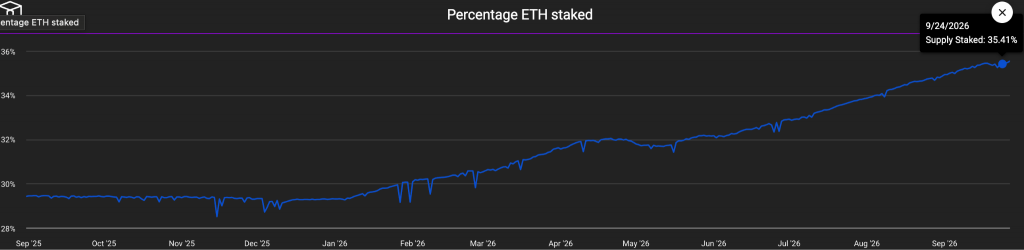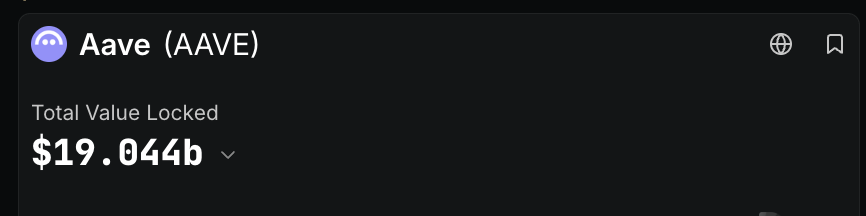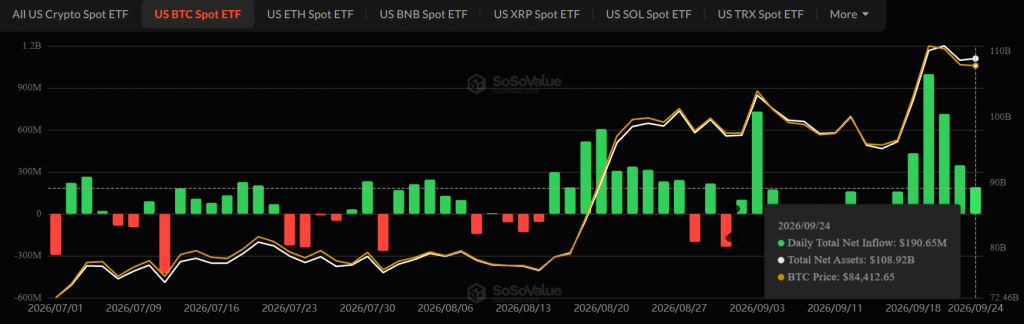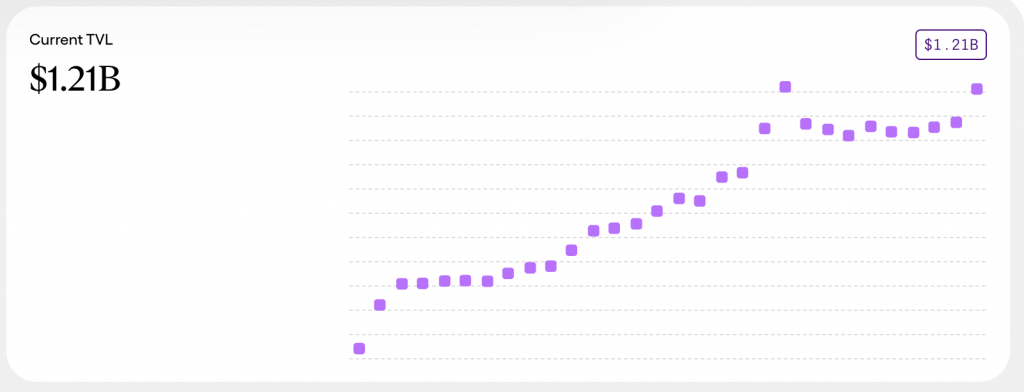

As Bitcoin enters a phase of consolidation in early Q2 2026, attention is turning toward large-cap altcoins. Altcoins are cryptocurrencies other than Bitcoin, and historically, sustained BTC consolidation is the setup that precedes capital rotating into the broader market.
This is not a call to action. It is a structured look at five high-cap altcoins with proven ecosystems, genuine liquidity, and track records long enough to study.
Here are altcoins worth watching in April 2026 based on their fundamentals, potential catalysts, and overall market presence.
TL;DR
- Bitcoin dominance consolidating near cycle highs has historically been a precursor to altcoin rotation, with ETH, SOL, and XRP typically leading the first wave.
- The five coins in this list are large-cap, exchange-listed, and have active developer ecosystems, making them relatively more stable than mid-cap or micro-cap alternatives.
- No single asset on this list is without downside risk; position sizing and a clear exit thesis matter more than entry timing.
Why April 2026 is an Interesting Moment for Altcoins
Bitcoin dominance measures Bitcoin’s share of the total crypto market cap. When dominance peaks and begins to trend down, it usually signals that investors are moving profit from Bitcoin into larger altcoins first, and then further down the risk curve over time.
As of early April 2026, the market is sitting in a consolidation band. Macro conditions, including stabilising US interest rate expectations and improving institutional flows into crypto ETFs, have reduced the aggressive sell pressure that defined Q1. The result is an environment where patient, fundamentals-first altcoin exposure has a reasonable risk/reward.
The five coins below are selected specifically because they are high-cap, have scalable ecosystems, and trade with genuine daily liquidity. These are not speculative bets on unproven technology. They are established networks at different stages of their growth curves.
Get WazirX News First
The 5 Best Altcoins to Consider in April 2026
| Coin | Primary Use Case | Network Type | Risk Level | On WazirX |
|---|---|---|---|---|
| Ethereum (ETH) | Smart contracts, DeFi, staking | Layer 1 | Medium | Yes |
| Solana (SOL) | Consumer apps, high-speed DeFi | Layer 1 | Medium | Yes |
| XRP (XRP) | Cross-border payments | Layer 1 | Medium | Yes |
| BNB (BNB) | Binance ecosystem utility | Layer 1 | Medium | Yes |
| Sui (SUI) | DeFi, gaming, parallel execution | Layer 1 | Medium-High | Yes |
| Avalanche (AVAX) | Enterprise subnets, custom chains | Layer 1 | Medium | Yes |
1. Ethereum (ETH)
Ethereum is the leading smart contract platform and the backbone of global DeFi activity.
ETH is more than a speculative asset. It is the gas token powering billions in daily on chain transactions. Since the Merge and later upgrades, Ethereum runs on proof of stake. This allows staking rewards while also burning a portion of fees, which can make ETH deflationary during periods of high usage.
Why ETH matters April 2026:
Layer 2 networks like Arbitrum, Optimism, and Base have reduced user costs while Ethereum remains the core settlement layer. Institutional demand has also grown after spot ETH ETFs launched, strengthening its role as a long term asset.
Risk:
Mainnet gas fees can still rise during congestion. Liquidity is spread across multiple Layer 2 networks, which adds complexity. Regulatory clarity around staking rewards is still evolving.
| Metrics | Current Price | Market Cap | CMC Rank | 24h Volume |
|---|---|---|---|---|
| Value | $2,028 | $380B | #110 | $55M |
Learn how to buy Ethereum in India
2.Solana (SOL)
Solana is a high throughput Layer 1 blockchain built for speed and low costs. It can handle thousands of transactions per second with very low fees, making it popular for consumer apps, meme coins, and DeFi activity. In the past, this came with tradeoffs like lower decentralisation and network outages, but stability has improved significantly since 2023.
Why SOL matters April 2026:
Solana has become a major hub for retail crypto activity. Jupiter, its leading DEX aggregator, often processes more daily volume than many mid sized centralised exchanges. The Firedancer upgrade, launched in late 2025, introduced a second validator client, improving network reliability and performance.
Risk:
Validator concentration is still higher than Ethereum. The network relies on fewer high capacity nodes, which can create risk. Any outages or governance issues could lead to sharp short term price drops.
| Metrics | Current Price | Market Cap | CMC Rank | 24h Volume |
|---|---|---|---|---|
| Value | $150 | $70B | #5 | $3B |
3. XRP (XRP)
XRP is the native asset of the XRP Ledger, built for fast and low cost cross border payments.
Ripple’s network connects banks and payment providers, and XRP can be used as a bridge currency to move money globally in seconds at much lower costs than traditional systems like SWIFT.
Why XRP matters April 2026:
Ripple’s legal battle with the US SEC was resolved in 2024, removing major uncertainty and enabling wider adoption. XRP is especially relevant for countries like India, where cross border remittances are high and transfer fees remain a major issue.
Risk:
XRP’s growth depends on adoption by banks and institutions. Competition from stablecoins and central bank digital currencies could limit its role. Price volatility also remains high for an asset designed for payments.
| Metrics | Current Price | Market Cap | CMC Rank | 24h Volume |
| Value | $0.28 | $30B | ~#7 | $1.2B |
4. Sui (SUI)
Sui is a Layer 1 blockchain built by Mysten Labs, created by former Meta engineers. It uses the Move programming language and an object based design that allows transactions to run in parallel instead of sequentially. It is particularly suited for applications that require many small transactions to happen at the same time.
Why SUI matters April 2026:
Sui’s ecosystem has grown quickly, with rising Total Value Locked driven by protocols like Cetus, Aftermath, and Navi. It is also attracting interest from gaming studios due to its performance. As an early stage ecosystem, it offers both growth potential and higher risk.
Risk:
Sui is still a newer network. Token unlocks from early investors can create sell pressure. It also faces strong competition from other Layer 1 blockchains and must continue to attract developers and liquidity.
| Metrics | Current Price | Market Cap | CMC Rank | 24h Volume |
|---|---|---|---|---|
| Value | $1.85 | $5B | #25 | $250M |
5. Avalanche (AVAX)
Avalanche is a Layer 1 blockchain known for its subnet architecture. A subnet is a custom blockchain within Avalanche that can have its own rules, validators, and token system while still being part of the larger network.
This design is built for institutions. Companies can create permissioned blockchains with compliance features like KYC, without relying on a fully public network. This makes Avalanche different from platforms like Ethereum or Solana.
Why AVAX matters April 2026:
Avalanche has partnered with financial institutions, gaming companies, and government related projects through subnets. Its C Chain, which supports Ethereum based applications, continues to attract DeFi projects looking for lower fees. AVAX is also used for staking and subnet creation, creating real network demand.
Risk:
Avalanche’s DeFi activity remains lower than Ethereum and Solana. If subnet adoption does not lead to strong on chain usage, its long term value may weaken. Subnets using their own tokens can also reduce demand for AVAX within those ecosystems.
| Metrics | Current Price | Market Cap | CMC Rank | 24h Volume |
|---|---|---|---|---|
| Value | $22 | $9B | #15 | $450M |
How to Think About Sizing in This Environment
Large-cap alts carry lower relative risk than small-cap or newly launched tokens, but they are not immune to significant drawdowns. In prior cycles, even ETH and SOL experienced 50% to 70% corrections from peak to trough within the same bull market year.
A common framework for Indian investors building an altcoin allocation:
Consider starting with a larger weight in ETH and reducing position size as you move toward newer, higher-growth assets like SUI. ETH offers the broadest liquidity, the most institutional recognition, and the longest track record of recovery from drawdowns. SUI offers more asymmetric upside but with commensurately more uncertainty.
The key insight from the altcoin investment strategies guide is to define your exit thesis before you enter. Ask yourself: at what price or at what market condition would you reduce or close this position? That question, answered honestly before you buy, is more protective than any amount of research after the fact.
Start Trading on WazirX
All five coins covered in this post are available to trade on WazirX. You can buy ETH, SOL, XRP, SUI, and AVAX directly with INR and access real-time order books, price charts, and portfolio tracking in one place.
Frequently Asked Questions
SOL stands out due to strong retail activity, high trading volumes, and continued ecosystem growth. SUI also has momentum with rising DeFi adoption. AVAX could see upside if new subnet partnerships translate into usage.
ETH and SOL are stronger core holdings due to established ecosystems. XRP, AVAX, and SUI offer more specific narratives but come with higher uncertainty. A balanced allocation depends on risk appetite.
ETH is the core infrastructure for DeFi and Layer 2s. SOL focuses on speed and retail activity. XRP is built for payments and remittances. AVAX targets institutional use through subnets. SUI is an early stage chain focused on performance and gaming.
ETH is generally considered the most stable due to its network effect and institutional adoption. SOL comes next with strong usage, while SUI and AVAX carry higher execution risk.
You can set price alerts and monitor live prices for most of these tokens directly on WazirX. Use the watchlist feature to track multiple coins simultaneously and be notified when key support or resistance levels are reached.
Watch Bitcoin dominance as the primary indicator: when it peaks and starts declining, capital typically rotates into altcoins. A Fear and Greed Index reading climbing back above 30 to 35 is a secondary confirmation. Geopolitical de-escalation and positive US regulatory developments (CLARITY Act progress) are the macro tailwinds that could compress the timeline significantly.
Frequently Asked Questions
What Is The Safest Cryptocurrency To Invest In?
Bitcoin has had the highest market capitalization, has been around the longest, has the most experienced development team, and has enormous network impact and brand recognition. As a result, while trading cryptocurrencies, the rate of return on Bitcoin is commonly used as a benchmark. However, the risks associated with cryptocurrencies remain, and the safest cryptocurrency for you depends on your analysis.
Is Cryptocurrency Safe To Invest In?
Cryptocurrency investments are subject to market risks, but if sufficient security measures are not taken, trading accounts can be maliciously accessed. Investments come with risks and uncertainties, and we cannot claim that any digital currency investment is risk-free. Buying and selling cryptocurrencies can be risky even if the trader is knowledgeable about the market and treats their coins carefully.
Can I Invest In Cryptocurrency?
Yes, with exchanges like WazirX, you may invest in cryptocurrency in India. To begin, go to the WazirX website and register. After that, you will receive a verification email. The link received by verification mail will only be available for a few seconds, so make sure you click it as quickly as possible. This will successfully verify your email address. The following step is to set up security, so choose the best solution for you. After you've set up the security, you'll be given the option of continuing with or without completing the KYC process.
How Cryptocurrency Works?
Cryptocurrencies use cryptography technology to keep transactions and their units (tokens) secure. Cryptocurrency works via a technology called the blockchain. A blockchain is a decentralized technology that handles and records transactions across numerous computers. The security of this technology is part of its value.
How To Invest In Cryptocurrency Stocks?
Cryptocurrency can be purchased in two ways: through mining or exchanges. The process of confirming and adding transactions to the blockchain public ledger is known as cryptocurrency mining. Cryptocurrency exchanges are another option. Exchanges make money by charging transaction fees, but there are alternative platforms where you may communicate directly with other cryptocurrency traders.
Is Ethereum Safe To Invest?
The Bitcoin market is unquestionably more volatile than the stock market. This may not be the market for you if you are incredibly risk-averse. Ethereum, on the other hand, may be a terrific investment for you if you're a diamond-handed investor who won't lose sight of short-term losses. Ethereum is a relatively safe investment as it is also based on blockchain.
How Many Cryptocurrencies Are There?
There are over 5000 other digital currencies available on the internet in addition to Bitcoins. The only problem is that they haven't gotten the users' attention. Besides Bitcoins, a few other digital currencies have gained popularity among users. It's been more than ten years since Bitcoins were first released, and now they've achieved new heights thanks to their phenomenal success.
Is Crypto Legal In India?
Cryptocurrencies are legal in India, and anyone can purchase, sell, and exchange them. It is currently uncontrolled, as India lacks a regulatory structure to oversee its operations. Per the Ministry of Corporate Affairs, companies must now record their crypto trading/investments within the financial year. In cases where a person receiving the gains is an Indian tax resident, or the cryptocurrency is regarded as domiciled in India, cryptocurrency transactions have been taxable in India
Is Pi Cryptocurrency Safe?
Pi Network captured the crypto community’s interest even before it officially debuted. Its innovative mobile mining approach and user-friendly design simplify crypto adoption for a broader audience. Some users see this as a chance to get engaged in the crypto from the beginning and profit in the future, similar to how early Bitcoin adopters made huge profits by mining and keeping the coin. Other users have compared Pi to a worthless multi-level marketing (MLM) scheme.
Is crypto legal?
Crypto is legal in most countries, including India. While nations like the U.S. and many in Europe have regulatory frameworks, others like China have strict bans.
Disclaimer: Click Here to read the Disclaimer.