

Last year this time on Oct 6 2025, BTC hit its $126,272.76 intraday peak. Today it sits about 33% lower. And this begs the question, how bad is this bear market really?
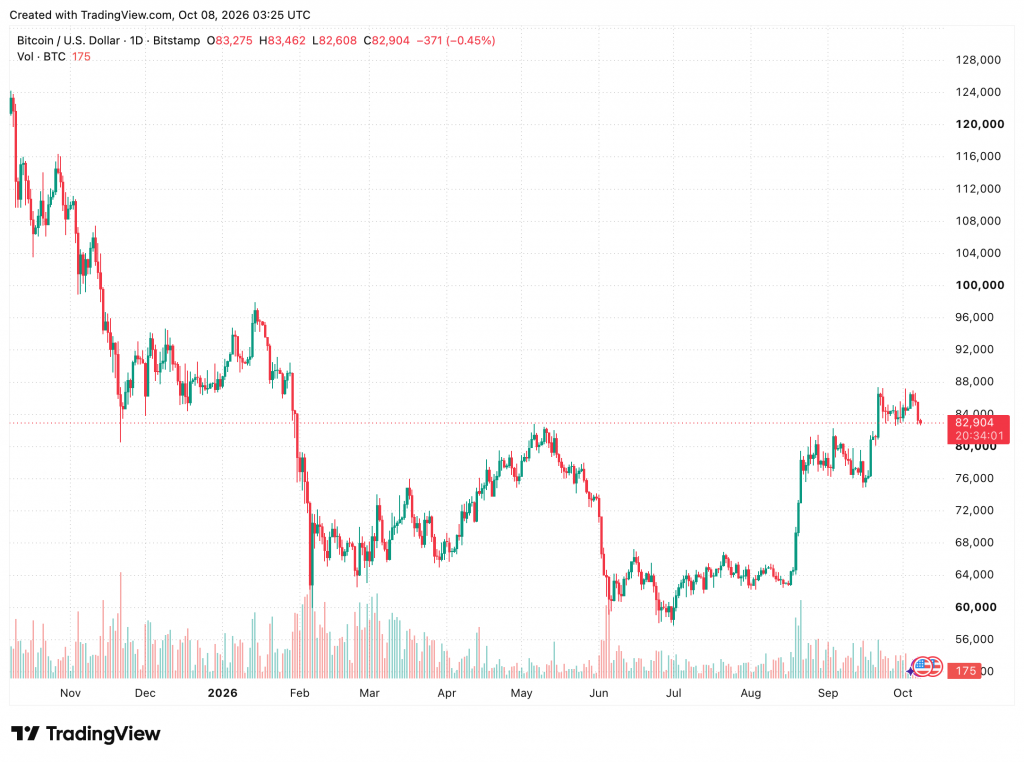
By Wall Street convention, a bear market is a sustained fall of 20% or more from a peak.
For this cycle, that line sits at $101,018, and BTC fell through it in November 2025. So yes, this is a bear market. But in a market as volatile as bitcoin, 20% falls happen even inside bull runs, so crossing the line tells you little about how bad a bear market is.
The real measure of how bad a bear market is: how far the price keeps falling after it crosses that line.
In the past cycles, bitcoin has fallen 77% to 85% before reaching its lowest point of the cycle. And that is what we will cover in this article: Why this cycle stopped so much shorter, and what the shallower fall hides.
How Far This Cycle Has Fallen, Compared With the Past?
| Cycle | Peak | Bear market low | Max drawdown |
| 2013 to 2015 | ~$1,150 | ~$170 | ~85% |
| 2017 to 2018 | ~$19,700 | ~$3,200 | ~84% |
| 2021 to 2022 | ~$69,000 | ~$15,500 | ~77% |
| 2025 to 2026 | ~$126,270 | ~$60,000 (so far) | ~49% (so far) |
If you look at the table, you will easily spot a pattern: every earlier cycle lost roughly four-fifths of its value. In the first two cycles(2018 and 2022) the first 30% fall turned out to be less than halfway to the bottom, so traders who bought it were still sitting on losses a year later.
That is why this cycle surprised us: Historically bitcoin should have fallen to around 80%(roughly $25,000). Instead, it fell only about 49%, to nearly $60,000.
Every time the price dropped toward that level, buyers stepped in, and it has not broken below it since.
What Changed: Who Buys When Bitcoin Falls?
So what stopped the fall at 49% this time? The answer lies in who is buying.
In earlier bear markets, the bottom came only through retail capitulation: When prices dropped, individual holders, many of them on leverage, gave up and sold at any price.
The moment regular investors panic during a sharp crash and sell everything at a loss just to make the pain stop.
In crypto, this wave of “giving up” usually marks the absolute bottom, because once all the panic-sellers are out, there is no one left to push the price lower.
And because there were no large, patient buyers, each wave of panic selling pushed the price lower until there was no one left to sell.
This cycle, however, has two new kinds of buyers:
- Institutions buying through spot Bitcoin ETFs: A pension fund or wealth manager often cannot hold bitcoin directly because of custody and compliance rules, but it can buy a bitcoin ETF through the same account it uses for stocks. When it does, the ETF issuer buys real bitcoin to back those shares, so institutional money now reaches the spot market.
- Corporate treasuries: Companies like Strategy hold bitcoin on their balance sheets and buy into weakness rather than sell. Strategy added 8,178 BTC in November 2025, at an average near $102,171, while the price was sliding toward the bear market line.
When bitcoin falls, these buyers buy instead of selling.
But the same buyers that cushion falls also bring new risks.
- Institutional money can leave as fast as it arrives. The same ETF that lets money flow in with one click lets it flow out with one click. In late 2025, ETF allocators and treasuries quietly stepped back, and when ETF holders redeem, issuers sell bitcoin to pay them. The support became selling pressure.
- Bitcoin now moves with interest rates, the dollar and oil: Its new buyers also manage stocks and bonds, so when yields rise they cut risk everywhere, and bitcoin is often among the first assets sold. That is exactly what happened this morning: rising oil, firm Treasury yields and a stronger dollar triggered the $403 million liquidation. This is why knowing how Fed rates affect crypto is now core trading knowledge.
- The milder fall is bitcoin’s alone: The institutional buyers that softened bitcoin’s drop mostly don’t buy smaller crypto, since most of those coins have no spot ETF and few companies hold them in their treasuries. Without that support, they fell much harder.
Final Thoughts
This bear market is milder because bitcoin finally has buyers who stay when prices fall. But milder is not the same as over. The $60,000 floor, the ETF flows and the macro calendar will decide what comes next. Until they do, treat this cycle with respect: buy in stages, keep your leverage low, and size every position to survive being wrong.
 Disclaimer: Click Here to read the Disclaimer.