

Bitcoin has been a great topic of discussion amongst investors, finance professionals, media outlets, investment commentators, bloggers, etc. The cryptocurrency has been called by a lot of names.
Some of them are ‘the next financial revolution’, internet currency, decentralized money, digital gold, gold 2.0. But what is it exactly?
Bitcoin primarily consists of two things. The token and the protocol that powers the token. In 2009, anonymous creator(s) Satoshi Nakamoto mentioned both, as a ‘Peer-to-Peer Electronic Cash System’ in the white paper.
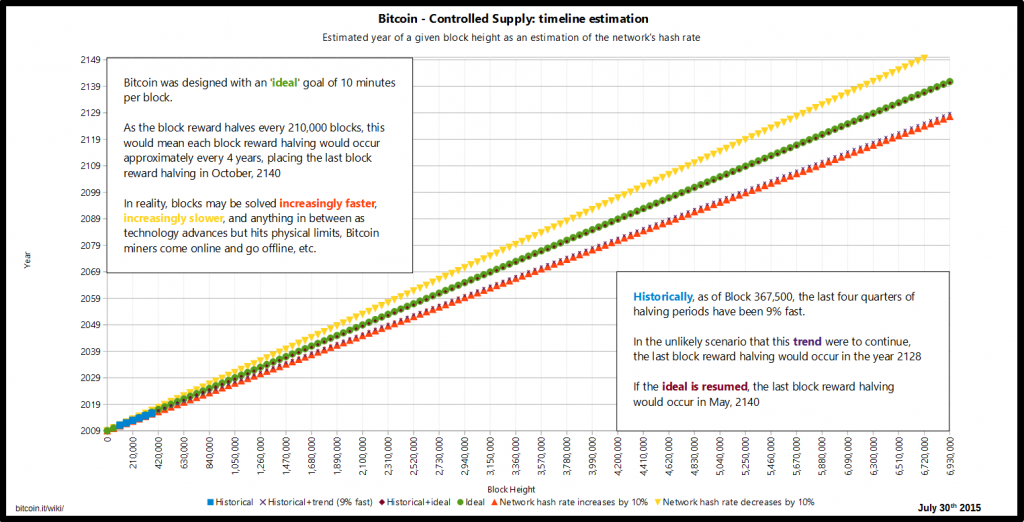
Represented by the symbol BTC, bitcoin is a medium-of-exchange. By design, there is a cap on the total supply of bitcoin. Only 21 million bitcoins will ever be available.
No individual or centralized authority controls bitcoin’s creation and circulation. BTC leverages cryptography for supply, issuance, and transaction verification. That’s why Bitcoin is a cryptocurrency https://wazirx.com/blog/what-is-cryptocurrency/
On a protocol level, Bitcoin is a distributed network of computers that maintains a record/ledger of all BTC transactions. This network is called the Bitcoin blockchain.
Get WazirX News First
Every network participant has a copy of the ledger, which makes it difficult for hackers and infiltrators to gain access and alter the network data. To understand how this all happens visually, check out the video below:
Why Bitcoin Came into Being?
In the year 2008, The United States housing market crashed. It was a reality check for people putting their complete faith and ‘trust’ in legacy financial systems.
The Great Recession was a result of the failure of trust-based systems. Trust is not bad but it creates inefficiencies and fissures in operational models. It also significantly increases the cost to operate such operational models.
2008’s economic slowdown illustrated the need to democratize finance, to give users the control of their money, to let people be their own banks.
Bitcoin’s idea took shape when Satoshi intended to minimize trust, through the use of cryptographic proof, decentralized network design, and open-source software.
He/She/They designed the protocol in such a way so that bitcoin transactions
- Could happen without permissions and beyond borders
- Are trustless, pseudonymous
- Can happen without anyone blocking or freezing a transaction of any amount
- Takes place faster than usual banking transactions and without being reversed
- Keep happening 24 hours a day, 365 days per year.
When Bitcoin was finally revealed to the public, erstwhile developer and one of Satoshi’s closest associates, Hal Finney posted this tweet:
How Does Bitcoin Work?
Bitcoin leverages a public-key cryptography system, peer-to-peer networking, and mining to process and verify payments.
Network participants or miners engage in a competition to verify transactions using advanced computing hardware designed to solve complex mathematical problems.
The miner who solves the problem verifies the transaction and adds it to a block. This goes on for a while until the block is full. The block then gets added to the longest chain. Miners win an appropriate number of bitcoins generated by the protocol, for quickly adding blocks to the chain. The reward system is called ‘proof-of-work’.
This is how new BTC is created, and subsequently becomes a part of the Bitcoin economy as miners sell these newly minted bitcoins to cover their operational costs.
The addition of transaction information to the blockchain eliminates a ‘double spending’ scenario.
How to Buy Bitcoin, and From Where?
Cryptocurrency exchanges can serve as the most appropriate place to buy Bitcoin. At WazirX, we offer the safest and fastest platform for you to start your Bitcoin journey.
What is the Future of Bitcoin?
Bitcoin has come a long way, since its inception in 2009. It is now supported by a multi-billion dollar BTC mining industry and billions of dollars worth of spot and futures trades that have ballooned Bitcoin’s value over the years. With a market cap of around $170 billion, it is no longer a DIY project for hobbyists.
Just recently, famed billionaire hedge fund investment heavyweight Paul Tudor Jones favored Bitcoin and said that he would give a section of his portfolio to BTC. According to his market outlook, ‘The Great Monetary Inflation’ Mr. Jones drew similarities between bitcoin and the 1970’s gold market.
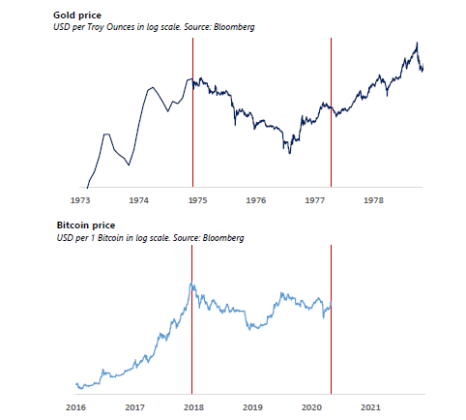
He said that the first cryptocurrency, just like gold stands to gain a lot on the investment front.
Apart from investment, tremendous progress is happening on the development front. Developers are working tooth and nail to speed up bitcoin transactions. Bitcoin development firm, Blockstream, and off-chain scaling solution Lightning Network deserve notable mentions in this regard.
Bitcoin also stands to become a great smart contract development platform. As per a CoinDesk report published last year, prominent Bitcoin programmer Pieter Wuille, unveiled a new language called ‘Miniscript’ that could find a use for programming Bitcoin-based smart contracts and decentralized applications.
Further Reading:
What is the difference between a token and a Bitcoin?
Are Tether and Bitcoin related? How Tether affects Bitcoin?
6 Things to Consider Before Investing in Bitcoin
What are the Differences Between Bitcoin and Ripple?
6 Bitcoin Myths That You Should Stop Believing
Bitcoin Wallets: The Definitive Guide
What is Litecoin (LTC)? Hows is it Different from Bitcoin?
What are the Differences Between Peer-to-Peer and Regular Bitcoin Exchanges?
Why are Bitcoins More Popular?
6 Tips to Keep Your Bitcoin Wallet Safe
5 Ways to Keep Bitcoin Transactions Private
What Will Happen when all Bitcoins are Mined?
Bitcoins in India: Challenges and Opportunities Ahead
Does Bitcoin have a volatile nature? Why?
Can Bitcoin Replace Credit Cards?
Why Start-ups Should Consider Using Bitcoins?
What is Bitcoin halving? Why is it important for cryptocurrency investors?
Can you buy shares in Bitcoin?
What is the difference between a token and a Bitcoin?
Are Tether and Bitcoin related? How Tether affects Bitcoin?
Frequently Asked Questions
How Does Bitcoin Work?
The blockchain, a distributed digital ledger, is what Bitcoin is based on. As the name suggests, blockchain is a linked database made up of blocks that store information about each transaction, such as the date and time, total amount, buyer and seller, and a unique identifier for each exchange. Entries are linked in chronological order to form a digital blockchain. Entries are linked in chronological order to form a digital blockchain. Blockchain is decentralized, which means any central authority does not control it.
How Can I Convert Bitcoins To Cash?
Bitcoin may be converted to cash in various ways, including crypto exchanges, Bitcoin ATMs, Bitcoin Debit Cards, and Peer to Peer Transactions. You may do this by using Bitcoin exchanges like WazirX. You may also sell Bitcoin for cash faster and more anonymously through a peer-to-peer marketplace.
What Is The Meaning Of Bitcoin?
Bitcoin is a type of cryptocurrency that was first introduced in January 2009. It is invented based on the key concepts and notions presented in a whitepaper by Satoshi Nakamoto, a mysterious and pseudonymous figure. The name of the individual or people who invented technology is yet unknown. Bitcoin promises reduced transaction fees than existing online payment methods, and a decentralized authority controls it, unlike government-issued currencies.
How Can I Get Bitcoin?
To begin, go to the WazirX website and register. After that, you will receive a verification email. The link received by verification mail will only be available for a few seconds, so make sure you click it as quickly as possible. This will successfully verify your email address. The following step is to set up security, so choose the best solution for you. After you've set up the security, you'll be given the option of continuing with or without completing the KYC process. Following that, you'll be sent to the Funds & Transfers section, where you can begin depositing Bitcoins into your wallet. You may also use INR to fund your WazirX Bitcoin wallet and then use it to purchase Bitcoin.
What Is Bitcoin?
Bitcoin is a decentralized digital currency that may be purchased, traded, and traded without intermediary like a bank. Bitcoin is built on the blockchain, which is a distributed digital ledger. Wei Dai suggested a new kind of money that relies on cryptography rather than a central authority to oversee its production and transactions on the cypherpunks mailing list in 1998. Bitcoin was the first application of that notion. In 2009, Satoshi Nakamoto sent out the first Bitcoin specification and proof of concept to a cryptography mailing group.
How Bitcoin Mining Works?
Bitcoin mining is a crucial element of the blockchain ledger's upkeep and development and the act of bringing new Bitcoins into circulation. It's done with the help of cutting-edge computers that solve exceedingly challenging computational arithmetic problems. Auditor miners are rewarded for their work. They're in charge of ensuring that Bitcoin transactions go through smoothly and legitimately. This standard was established by Satoshi Nakamoto, the founder of Bitcoin, to keep Bitcoin users ethical. By confirming transactions, miners assist in avoiding the "double-spending issue."
How Many Bitcoins Will Ever Be Created?
The source code of Bitcoin stipulates that it must have a restricted and finite quantity. As a result, only 21 million Bitcoins will ever be generated. These Bitcoins are added to the Bitcoin supply at a predetermined rate of one block every ten minutes on average. The supply of Bitcoins will be depleted once miners have unlocked this number of Bitcoins. It's possible, however, that the protocol for Bitcoin will be altered to allow for a higher supply.
What Type Of Currency Is Bitcoin?
Bitcoin is a type of digital currency or cryptocurrency. In January 2009, Bitcoin was established. It's based on Satoshi Nakamoto's ideas, which he laid out in a whitepaper. The name of the individual or people who invented the technology remains unknown.
Who Created Bitcoin?
Bitcoin is the first application of the concept of "cryptocurrency," first articulated in 1998 on the cypherpunks mailing list by Wei Dai, who proposed a new form of money that relies on cryptography rather than a central authority to manage its creation and transactions. Satoshi Nakamoto published the initial Bitcoin specification and proof of concept on the cryptography mailing list in 2009. Satoshi exited the project in late 2010, with little information about himself available. Since then, the community has evolved, with numerous people working on Bitcoin. Satoshi's anonymity has sparked unfounded fears, many of which may be traced back to a misunderstanding of Bitcoin's open-source nature.
 Disclaimer: Click Here to read the Disclaimer.

















3 Comments