

A QR code is commonly used to receive crypto, but not every wallet QR code serves the same purpose. Some contain wallet addresses, while others represent sensitive information that should never be shared.
Understanding the difference is important because scanning or exposing the wrong code can put your crypto holdings at risk. This guide explains how private key QR codes work, their uses, and the precautions users should take.
-
A private key QR code is a scannable representation of a crypto wallet’s private key, which is used to authorize transactions.
-
Compatible wallet applications may scan these codes to import an account, but the QR format does not provide additional protection.
-
Private keys must remain confidential. Public wallet address QR codes, on the other hand, can be shared to receive crypto.
What Is a Crypto Private Key?
A crypto private key is a secret cryptographic value that allows a wallet to authorize blockchain transactions. It is mathematically linked to a public key, from which a wallet address may be derived.
A private key proves that a transaction was authorized by someone controlling that key, without revealing the private key itself.
Here is how common wallet credentials differ:
| Component | Purpose | Can You Share It? |
| Private Key | Signs transactions and controls associated funds | No |
| Public Key or Wallet Address | Helps identify where crypto can be sent | Generally yes |
| Recovery Phrase | Restores wallet keys and access | No |
Unlike a private key, a recovery phrase can generate multiple private keys and addresses in compatible wallets.
What Is a Blockchain Private Key QR Code?
A blockchain private key QR code is a machine-readable image containing a crypto private key in an encoded format. It enables compatible wallet applications to read the key without requiring manual entry.
For example, a Bitcoin private key may be represented as text in Wallet Import Format (WIF). A QR code can encode that text for scanning.
However, a QR code does not encrypt or protect the private key automatically.
How Does a Private Key QR Code Work?
A crypto private key QR code converts the key’s text representation into a pattern that compatible software can scan and decode.
The process involves three stages:
- QR Code Encoding: A QR code generator converts a private key’s supported text format into a scannable pattern.
- QR Code Scanning: A compatible wallet application reads the pattern using a device camera or supported import function.
- Private Key Import: The application decodes the information and imports the private key, enabling it to manage the associated blockchain account or funds.
The QR code acts as a convenient input method. It does not create a new private key or provide two-factor authentication.
Important: Never paste an actual private key into an online QR generator. Such services may expose sensitive information.
Private Key QR Code vs. Wallet Address QR Code
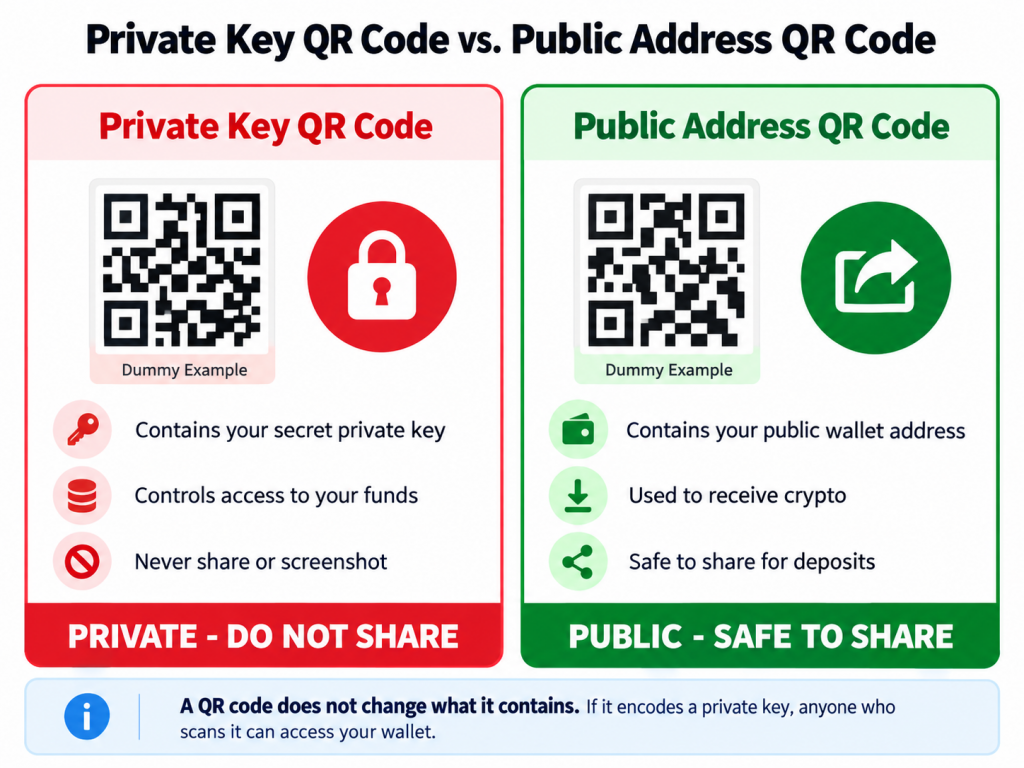
The main difference is that a private key QR code grants control over funds, while a wallet address QR code helps others send funds to you.
| Factor | Private Key QR Code | Wallet Address QR Code |
| Purpose | Import a private key | Receive crypto |
| Information | Secret private key | Public wallet address |
| Who Can Scan It? | Only an authorized user in a private setting | Anyone sending crypto |
| Access to Funds | Can enable transaction authorization | Does not grant spending access |
| Safe to Share? | No | Yes, subject to privacy considerations |
What Happens If Someone Gets Your Crypto Private Key?
- Unauthorized Access to Your Crypto Wallet: Someone with your private key can import it into another wallet and authorize transactions without your permission.
- Potential Loss of Crypto Funds: They can transfer your crypto to another address, and completed blockchain transactions are generally irreversible.
- Exposure Through Private Key QR Codes: Screenshots, photographs, or shared copies of your private key QR code can expose your wallet credentials and compromise your funds.
How Do I Find My Crypto Private Key?
Where your crypto private key is stored depends on the wallet or platform you use.
- Custodial Crypto Exchange
On a custodial exchange, private keys are managed through the platform’s custody arrangements. Users access their accounts through the exchange interface rather than receiving individual private keys to export.
- Self-Custody Software Wallet
Some self-custody wallets provide a private key export option within their settings. The availability and location of this feature depend on the wallet application. Any export should be handled privately and only when necessary.
- Hardware Wallet
Hardware wallets are designed to keep private keys within the device, avoiding unnecessary exposure. Users typically back up their wallets using a recovery phrase instead of exporting individual private keys.
Learn more about hot wallets vs. cold wallets.
Can You Access a Bitcoin Wallet With a Private Key?
Yes. A compatible Bitcoin wallet can import a valid private key and use it to authorize transactions involving the Bitcoin controlled by that key.
However, importing a single Bitcoin private key does not necessarily restore every address or asset associated with a larger wallet.
Modern wallets often derive multiple keys from a recovery phrase.
If a private key has been exposed, transferring the associated funds to a newly generated wallet with uncompromised credentials is generally recommended.
Should You Create a Private Key QR Code?
A private key QR code simplifies wallet imports but increases the risk of exposing sensitive information.
Potential risks include:
- Screenshots and Photos: Images may be accidentally shared or accessed.
- Cloud Backups: Automatic syncing can expose private keys.
- Online QR Generators: Third-party websites may store submitted keys.
- Shared Printers: Printed copies may remain accessible.
- Scams: Fraudsters may request private key QR codes.
For better protection, consider hardware wallets and offline recovery phrase backups. Avoid importing private keys from unknown sources, as others may retain access. If a QR code is necessary, generate and store it offline.
Private Key QR Code Safety Checklist
Follow these precautions when managing wallet credentials:
- Keep private keys and recovery phrases offline.
- Share only public wallet addresses when receiving crypto.
- Avoid saving private key screenshots or cloud backups.
- Use reputable hardware wallets when appropriate.
- Verify recipient addresses before authorizing transfers.
- Never disclose private keys to anyone claiming to offer wallet support.
Read our guide on seed phrases and their importance to understand wallet recovery and backup practices.
Final Thoughts
A crypto private key QR code offers a convenient way to represent wallet credentials, but it does not make them safer. While self-custody users manage their own keys, custodial platforms such as WazirX manage private keys through their custody arrangements.
Understanding the difference between private keys, recovery phrases, and public addresses helps users make informed decisions about wallet access and protection.
Frequently Asked Questions
Someone holding your private key can potentially import it into a compatible wallet, authorize transactions, and transfer the associated funds without your permission.
Self-custody software wallets may provide private key export options. Custodial exchanges manage keys on users’ behalf, while hardware wallets generally keep them within the device.
A private key generates digital signatures that authorize blockchain transactions. It allows users to demonstrate control over associated funds without disclosing the secret itself.
Yes. Compatible Bitcoin wallets can import private keys to manage associated funds. However, one private key may not restore an entire multi-address wallet.
 Disclaimer: Click Here to read the Disclaimer.