Polygon (POL), formerly known as MATIC, dropped roughly 77% through 2025, and is currently trading near the $0.10 support level in early 2026. That kind of drawdown stings for anyone who bought higher, but it also means the conversation around Polygon in 2026 is less about what it did and more about what it is doing right now, and whether the fundamentals support a recovery.
The Lisovo hard fork was deployed on March 4, 2026, introducing subsidised gas costs for agent-to-agent payments, enhanced wallet support, and improved smart contract compatibility. In January 2026, Polygon launched its Open Money Stack, a payments-focused framework aimed at stablecoins and institutional use, which drove a 33% price rally in the first week of the year, and the broader Gigagas roadmap, targeting 100,000 transactions per second, is actively being built out.
If you are trying to figure out how to buy Polygon in India and want to understand what you are actually getting into, this guide covers both sides of that question.
A Detailed Overview of Polygon
Polygon was founded in 2017 as Matic Network by developers and entrepreneurs: Jaynti Kanani, Sandeep Nailwal, and Anurag Arjun, with Mihailo Bjelic later joining as a co-founder. It rebranded to Polygon in 2021 to reflect an ambition that had grown well beyond a single scaling chain. The goal was to become a full multi-chain ecosystem that makes building on Ethereum faster, cheaper, and far more practical at scale.
The core problem Polygon was built to solve is straightforward. Ethereum is the most widely used smart contract platform in the world, but it gets expensive and slow under load. Gas fees during high-demand periods can be significant enough to make small transactions completely impractical. Polygon runs as a Layer 2 on top of Ethereum, processing transactions off the main chain and settling them back periodically, which keeps costs low and speeds high without sacrificing Ethereum’s security.
The token was originally known as MATIC. The migration from MATIC to POL was officially completed on September 4, 2024, as part of the broader Polygon 2.0 roadmap. POL was redesigned to serve as a unified token across Polygon’s entire multi-chain architecture, covering staking, validator incentives, gas fees, and governance across the ecosystem rather than just a single chain.
POL serves as the native gas token of the Polygon ecosystem, powering all transactions and securing the network through staking. Stakers earn rewards for their participation and can also become eligible for Agglayer ecosystem airdrops.
On the technical side, Polygon has been pushing hard on zero-knowledge proof technology. The zkEVM, Polygon’s ZK-powered Ethereum-compatible chain, is designed to bring the security guarantees of ZK proofs to a developer experience that feels familiar to anyone who has built on Ethereum. The 2026 roadmap also includes the AggLayer reaching full maturity, which enables unified liquidity and seamless cross-chain interoperability, alongside new ZK-focused ecosystem launches, including Katana, Miden, and Billions.
Where Polygon Stands in March 2026
POL is currently trading at $0.09329, with a market cap of approximately $990 million and a circulating supply of 11 billion tokens. The price is sitting below both its 30-day and 200-day moving averages, and the broader altcoin market has been cautious through early 2026, with capital largely concentrated in Bitcoin.
The picture underneath the price is more interesting, though. Polygon recorded 1.4 billion transactions in 2025 and completed a 100 million POL token burn in February 2026. That level of network activity running alongside a subdued token price is the kind of divergence that longer-term investors tend to pay attention to.
The community sentiment around POL in 2026 is a mix of stubborn optimism and growing impatience. Ecosystem momentum is real, with record burns, rising revenue, and institutional partnerships like Coinme, but the price has not yet reflected that activity. Whether it does depends on how the Gigagas roadmap lands and whether the broader market shifts back toward altcoins.
Buying Polygon in India in 5 Easy Steps
Below are a few simple steps you can follow to buy Polygon (POL) in India with WazirX, India’s most trusted and widely used crypto exchange.
The best way to buy POL is to deposit INR into your WazirX wallet.
Step 1 – Sign up on the WazirX platform.
To begin buying and selling BTC, you are required to create an account on the WazirX platform by signing up. You can also log in directly if you already have an account on the platform.
For your reference, here’s how you can open an account on WazirX.

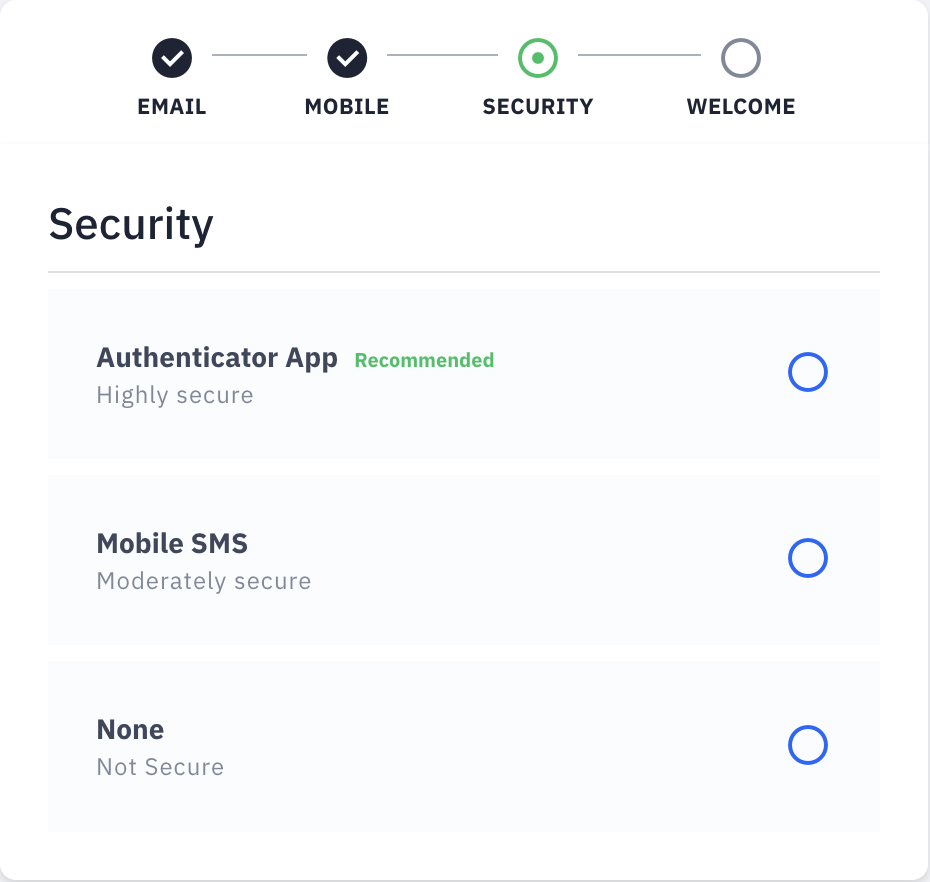
Step 2 – Set up your account security by verifying your email address.
This step is about verifying your email address and mobile number. After you sign up on the WazirX platform, you’ll get a verification code on your registered email and mobile number. By verifying the code, you’ll get multiple options to ensure the security of your account – the authenticator app and mobile SMS.
Note: The authenticator app is a more secure way to stay safe when compared to mobile SMS because there’s a risk of delayed reception or SIM card hacking.
Step 3 – Complete the KYC process.
After choosing your country, you can proceed with completing the KYC process on WazirX.
Note: You must complete your KYC to be able to trade or withdraw funds on the WazirX app.
Step 4 – Add funds to your WazirX wallet.
To add funds, simply go to your account on the WazirX app or web. Click on “Funds” and then on “Deposit INR.”
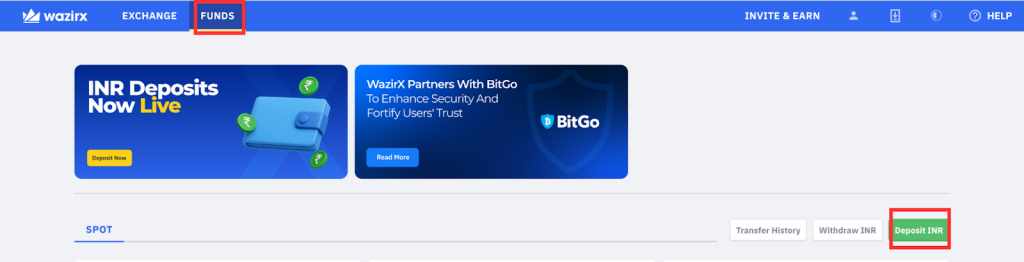
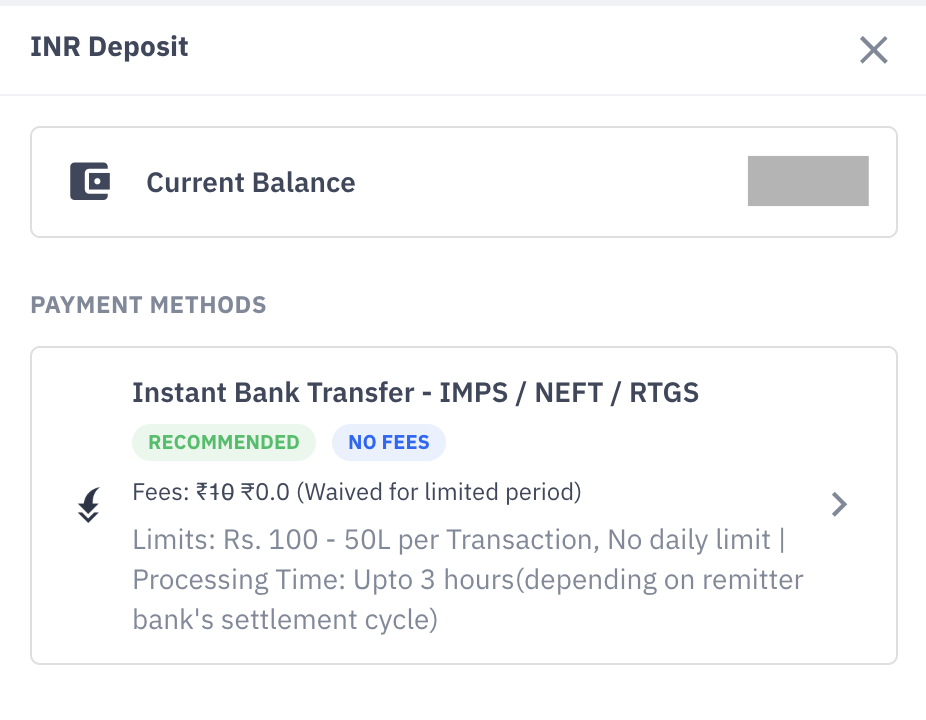
You can deposit INR using any mode (IMPS/NEFT/ RTGS).
Step 5 – Finally, you can buy BTC on WazirX.
You can now easily purchase BTC tokens using INR Deposits.
After logging in to your WazirX account, you can choose INR from the “Exchange” tab. You can also check all the price charts, order book data, and an order input form on the right side of the screen.
Click “Buy” after entering the amount and checking the total INR amount to be paid.
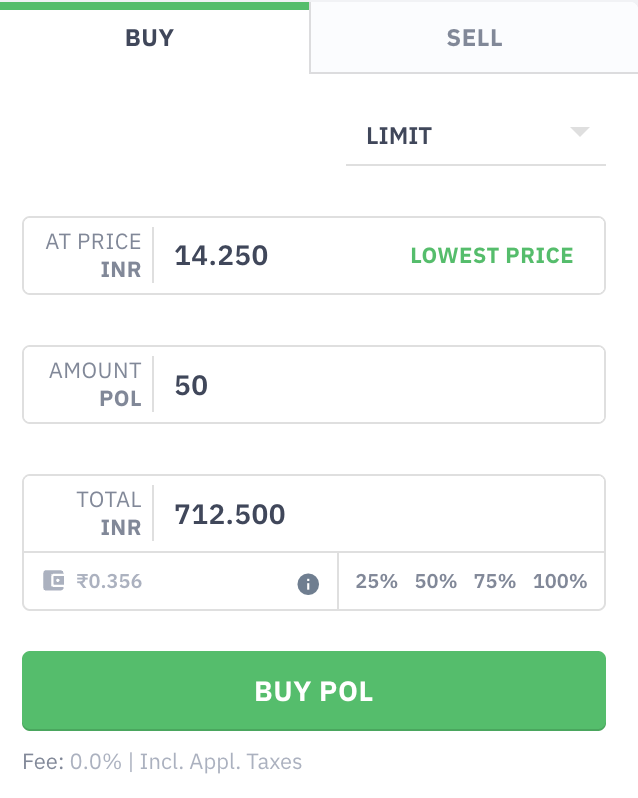
Your order will be placed according to the price you have entered.
Start buying POL on WazirX today.
Top 5 Reasons to Invest in Polygon (POL) in 2026
1. The Gigagas Roadmap Is a Serious Technical Bet
Polygon’s Gigagas roadmap targets 100,000 transactions per second through validator optimisations and AggLayer integration. For context, Ethereum currently handles around 15 to 30 TPS on mainnet. If Polygon delivers on this, it puts the network in a different conversation entirely for high-frequency financial applications, institutional settlement, and anything that requires genuine scale.
2. Real Activity, Not Just Promises
Polygon recorded 1.4 billion transactions in 2025 and burned 100 million POL tokens in February 2026. NFTs on Polygon are active. DeFi protocols are running and delivering. The network usage is not theoretical. It is live, measured, and growing, even through a difficult price period.
3. The Open Money Stack and Institutional Payments Play
Polygon’s launch of the Open Money Stack in early 2026 positions POL as core infrastructure for stablecoins and global institutional payments. Partnerships with names like Coinme point toward a network that is being taken seriously by real-world financial players, not just crypto-native developers.
4. The Lisovo Hardfork and Continuous Development
The Lisovo hard fork deploy was held on March 4, 2026 and introduced subsidised gas costs for agent-to-agent payments, enhanced wallet support, and an updated smart contract opcode. This is a team that keeps shipping. The upgrade cadence on Polygon has been consistent, and the 2026 roadmap has specific, measurable milestones attached to it rather than vague promises.
5. The Price Creates a Different Entry Point
POL is down significantly from both its 2021 peak above $2.90 and its 2024 high near $1.29. Analyst forecasts for 2026 range from $0.19 on the conservative end to $0.75 in bullish scenarios, with long-term projections pointing toward $4.94 by 203, if Polygon 2.0 delivers on its roadmap. That is a wide range, and nothing is guaranteed, but the current price looks very different to someone investing today versus someone who bought at the peak.
Polygon vs Ethereum: How They Compare
| Aspect | Ethereum | Polygon |
| Role in the Stack | Ethereum is the base layer that secures the network and hosts the core ecosystem. | Polygon is a scaling layer built on top of Ethereum to improve speed and cost efficiency. |
| Ecosystem Strength | Ethereum has the largest developer community, the most total value locked, and the strongest institutional credibility in crypto. | Polygon leverages Ethereum’s ecosystem while extending its usability through scaling. |
| Performance | Ethereum can become slow and expensive under heavy network demand. | Polygon processes transactions faster by handling them off the mainnet. |
| Cost | Ethereum gas fees can spike sharply during periods of high demand, making small transactions impractical. | Polygon offers significantly lower fees, making frequent and small transactions viable. |
| Developer Experience | Ethereum provides the foundational environment for DeFi and smart contract innovation. | Polygon offers full compatibility with Ethereum, allowing developers to build without facing high costs or congestion. |
| User Experience | Ethereum offers security and depth but can be costly and slower during peak usage. | Polygon delivers a similar experience at a fraction of the cost with faster execution. |
| Relationship | Ethereum’s growth drives activity across its ecosystem. | Polygon benefits from Ethereum’s growth, as increased demand creates a greater need for scaling solutions. |
In simple terms, Ethereum is the foundation, while Polygon is the layer that makes it usable at scale.
Buy POL directly with INR on WazirX.
Frequently Asked Questions
Is Polygon a good investment in 2026?
Polygon has real on-chain activity, a credible technical roadmap, and a price that is well below previous highs. The broader market has been cautious through early 2026, and POL faces genuine competition from other Layer 2 networks. Analyst forecasts for 2026 range from $0.19 to $0.75, depending on how the Gigagas roadmap progresses and how market conditions develop. Do your own research and only invest what you are genuinely comfortable losing.
What is POL trading at in India today?
POL is currently trading at approximately $0.093, which works out to roughly ₹7.70 to ₹8.00 per POL in Indian Rupees. Prices shift constantly, so check the live POL/INR rate on WazirX before placing any order.
What is the difference between MATIC and POL?
The migration from MATIC to POL was completed on September 4, 2024. POL is the upgraded token that serves as the unified gas and staking token across Polygon’s entire multi-chain ecosystem. MATIC was the original token tied primarily to the Polygon PoS chain. If you held MATIC, it has since migrated to POL at a 1:1 ratio.
Can POL reach $1?
The $1 target is plausible in a strong bull cycle context, though not a baseline projection for 2026. A scenario where Polygon 2.0 milestones land on schedule, zkEVM adoption accelerates, and macro conditions support a broader altcoin rally could push POL toward $1 by late 2027 to 2030.
Where can I buy Polygon in India with INR?
WazirX supports a direct POL/INR trading pair, meaning you can buy with rupees without going through USDT or any other intermediate currency. Deposit via IMPS, NEFT, or RTGS and trade directly.
Is now a good time to buy POL in India?
POL is trading near multi-year lows, with the broader market cautious in early 2026. The fundamental development activity on the network has stayed strong through the price decline, which is a meaningful signal for investors with a longer horizon. Many people in this kind of environment use rupee-cost averaging, putting in a fixed amount at regular intervals rather than trying to time an exact entry. That approach removes the pressure of calling the bottom perfectly and lets you build a position gradually as the picture develops.